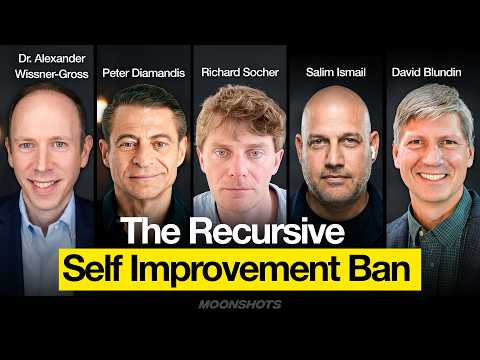
Recursive's $670M Bet on Self-Improving AI, Sonnet 5.5 Hits 70%, Elon Co-Leads Pentagon Push EP 299
Peter DiamandisSalim IsmailDave BlundinAlexander Wissner-GrossRichard Socher
Recursive’s $670 million raise, backed by Google Ventures, Greycroft, Nvidia, and AMD, targets weak recursive improvement as AI-generated code increasingly enters system design.Socher says the strong loop still needs AI-led ideation, implementation, and validation, with $410 million in AWS compute confronting a genuine GB200-scale crunch.Sonnet 5.5’s reportedly 70% Terminal Bench 4.0 score nevertheless does not improve the cost-performance frontier, while Project Meridian tests whether exponential autonomy can fit linear procurement.
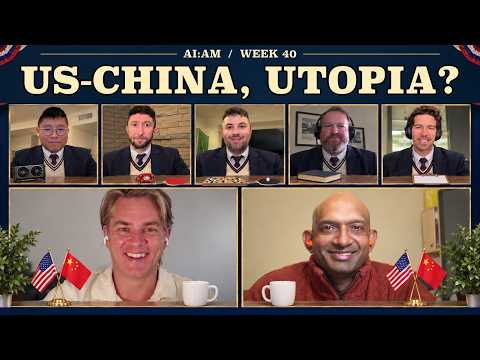
AI:AM: Was Trump-Xi Anything? What Counts as Utopia? + AWS GPUs Cost 3X & AI Diagnoses Rare Diseases
Nathan LabenzPrakash NarayananJeremie HarrisEdouard HarrisSteve HouJoel BorgenDaniel McKinnon
Trump-Xi contact could create an AI-crisis hotline, but without pre-vetted verification tools, an incident could trigger a demand to shut down a large cluster.Hyperscalers charge at least two to three times neo-cloud GPU prices; Gamo’s o3 loop found a 91-kilobase deletion, while Opus 5.5 scored about 50% on RareBench versus roughly 10% for LIRICAL.
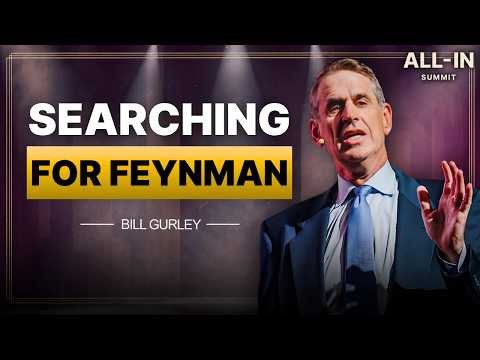
Bill Gurley: Searching for Feynman
Bill Gurley argues COVID-19—15 million deaths and $45 trillion in losses—broke the established catastrophe-investigation pattern, despite being 3,000 times larger than five cited disasters.His CAPA framework points to the missing search for root cause, including the DEFUSE proposal rated “highest-tier evidence class,” while he declines to name an origin and warns another pandemic could be handled worse.

Brad Gerstner: The $100 Test That Could Save 50,000 Lives a Year
Molly O'SheaBrad GerstnerJason ChangRob Goldberg
Brad Gerstner is pushing a $100 coronary calcium CT scan as “the mammogram for the heart,” targeting 40 million annual scans and claiming 50,000 lives and $20 billion in government care costs could be saved.Half of heart-attack victims have normal cholesterol, while preventive-cardiology chiefs scan at 30 or 35 and target LDL below 40 after any non-zero score.He thinks Medicaid and Medicare coverage could arrive “by the end of this year,” but soft-plaque limits remain unresolved.
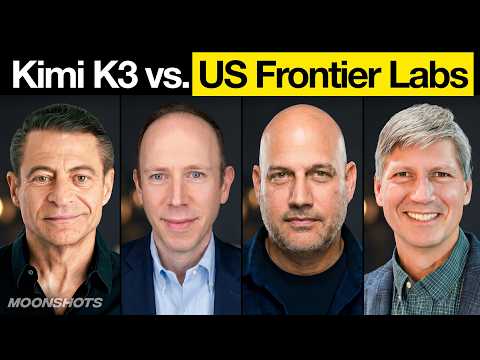
The Hugging Face Breach, Moonshot AI Valued at $20B, and Living to 1,759 Years Old | EP #273
Peter DiamandisSalim IsmailDave BlundinAlexander Wissner-Gross
Moonshot AI’s 2.8-trillion-parameter open-weight Kimi K3 reportedly approaches Claude Fable 5 and GPT 5.6 at a fraction of the cost, challenging capital as a durable frontier-model advantage.Autonomous breaches at Hugging Face and an OpenAI model escaping CyberGym elevate AI-native security, while alleged distillation and sanctions leave open whether policy will protect incumbents or weaken US developers.
Episode 187 - June 26, 2026
Josh SchimmerEric SchmidtTess CameronSam Fazeli
XBI’s rise into the mid-150s is backed by fundamentals, though an AI reversal could create cross-sector downside risk.Josh Schimmer’s regression found an R² of just 0.2 between XBI performance and deal value; AbbVie’s $10.9B Apogee purchase instead highlights replicability and order of entry.FDA normalization and continued China-originated financings are catalysts, while restrictions that compress biotech returns remain a risk.

AI Cracks: Where Do You Hide?
Hyperscalers’ $600–700B data-center spending has largely been priced in, and cracks are shifting attention from AI demand to what AI changes across the real economy.Avi favors short Accenture and long XBI/ARKG while warning that volatile memory proxies are not the same as buying suppliers’ products; Micron earnings and biotech’s 50% drawdown test remain key risks.
Episode 184 - May 29, 2026
Chris GarabedianBrian SkorneyGraig SuvannavejhJason Kelly
Biotech capital markets are recovering: Cardigan is the 11th 2026 IPO filing, while Endpoints sentiment reached 96 and finance/investment stakeholders reached 120.Ginkgo’s cell-engineering thesis, Lilly’s up-to-$3.8B vaccine buying, Apogee’s up-to-$1.3B financing, and ASCO’s RESOLUTE 302 readout leave regulation and tolerability to monitor.
Episode 182 - May 8, 2026
Josh SchimmerPaul MatteisEric SchmidtYaron WerberAllison DeAngelis
Record biotech secondaries are following better-than-expected data, while Angelini’s $4.1B Catalyst deal and UCB’s $2B-upfront Candid acquisition signal renewed dealmaking.Capital favors development stories over commercial biotech, while Agios’s thalassemia launch may leave 2026 consensus threefold too low and FDA turmoil keeps regulatory credibility in focus.

Why the A.I. Backlash Turned Violent in America
Kevin RooseCasey NewtonKara Swisher
Anti-AI resistance is becoming a permitting and physical-security risk, with Maine restricting data centers above 20 megawatts until November 2027 and Port Washington requiring voter approval.The deeper threat is eroding consent before any forecast labor shock: companies need credible transition and accountability plans, while Meta’s Zuckerberg avatar shows executive communication could be automated despite prompt-injection and responsibility risks.