PERSON DIRECTORY
Erik Torenberg
Erik Torenberg appears in 141 indexed conversations across The a16z Show, The Cognitive Revolution. This directory brings every appearance, source, TL;DR, digest, and transcript into one searchable feed.

Amazon CEO: $220 Billion Still Can’t Meet AI Demand
Andy JassyBen HorowitzErik Torenberg
Amazon expects about $220 billion of 2026 CapEx, yet AWS capacity is sold out for 2026, largely for 2027, and partly for 2028; AWS AI has exceeded a $25 billion revenue run rate.Data centers require investment roughly two years before monetization, pressuring free cash flow; broader enterprise inference adoption also hinges on costs Jassy still calls an order of magnitude too high.
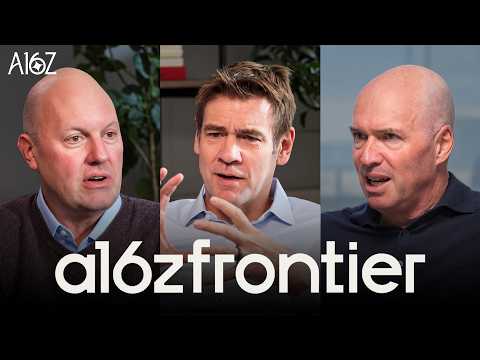
The Frontier Ideas a16z Wants to Fund Now | Marc Andreessen, Ben Horowitz & Chris Dixon
Marc AndreessenBen HorowitzChris DixonErik Torenberg
a16z is expanding the ACC Crypto Fund into a16z Frontier for “outer planets” beyond existing verticals as crypto’s boundaries blur with fintech and Wall Street.Marc Andreessen calls AI’s early-adopter gap with incumbents the widest of his career; employees adopting ahead of companies could fuel startup formation, while AI answers and Stack Overflow’s traffic drop point to an internet-economics reset.

AI:AM: Where's the Steering Wheel? My Agent Set the Password, Hidden Valence, Proofs Find Linux Bugs
Nathan LabenzPrakash NarayananCameron BergEverett HildenbrandtGrigore RosuPhil MaherErik Torenberg
Prakash warns AI has 12 months to lift GDP or risk a 2008-style collapse; Nathan says broader adoption of existing tools may suffice.Gemini 4 is competitive, but jailbreak concerns keep Nathan from switching, making trust a differentiator beyond benchmark performance.Runtime Verification found Linux kernel bugs with one Claude Code instance, while Nathan warns formal verification could speed deployment without solving alignment.

Why Every Company Needs to Own Its Intelligence
Erik TorenbergAlex AtallahAmjad Masad
Stripe’s acquisition of OpenRouter preserves its brand, roadmap, and product autonomy while pairing payments with model-independent inference infrastructure.OpenRouter’s marketplace reduces vendor lock-in, combines models, and pressures inference prices downward as enterprises evaluate task-specific performance rather than feature lists.Specialized decision models could lower model debt and police agent actions, while multi-model fusion reportedly approaches frontier quality at 40–50% of the cost; deception risk and cache reuse remain unresolved.

Why AI’s Next Breakthroughs Could Come from Outside the Big Labs
Erik TorenbergAaron LevieMartin CasadoSteven Sinofsky
Agent swarms expose a security gap: controls built for trustworthy, capacity-constrained humans fail when software exhausts APIs and confuses good tasks with bad ones.That implies upgrades across identity, authorization, observability, operating systems, networks, and granular data permissions.Meanwhile, Jevons-style option selection could shift innovation beyond frontier labs by making models faster, cheaper, and more accurate interfaces for traditional software.

What is Utopia? Presenting The Receipt Horizon, by Joel Borgen – Chapters 1–4
AI-assisted production used ChatGPT Pro, Claude, and ElevenLabs for “a couple hundred dollars of inference,” making creative economics part of the novel’s argument.Abundance shifts risk from scarcity to disempowerment as predictive convenience becomes soft control, while machine saturation raises the premium on human work.Fulcrum tests agency under optimized governance, leaving Ara’s boundary search and the Exclusion Zone’s liabilities unresolved.

Replit CEO Amjad Masad on What Young People Should Learn in the AI Era
Erik TorenbergAmjad MasadGagan Biyani
Amjad Masad says AI can now perform machine learning itself—“RSI,” “vibe research,” or “autoresearch”—and Replit is building a product enabling any business owner with data to fine-tune a model.He sees this as the next inflection after Replit Agent’s 2024 coding shift, while AI agents may solve the technology bottleneck behind failed no-manager structures and move Replit toward a “self-driving company.”

Why AI Is Giving Young People an Unprecedented Advantage
Ben HorowitzErik TorenbergGagan Biyani
AI is challenging college’s default role in preparing young builders for work, prompting a16z to launch a residential San Francisco academy for at least 50 creators.The model bundles status, community, project-based learning, and access to Databricks, NVIDIA, and Stripe, with student outcomes as its incentive; five-year results will test whether it scales beyond technology.

The People Who Built Hip-Hop Are Finally Getting Their Due
Ben HorowitzErik TorenbergNasGrandmaster CazSteve Stoute
Paid in Full Foundation addresses hip-hop’s value-capture gap with 2.5:1 matching donations, no paid employees, and funds flowing to artists.Nas’s recognition-first award format overcame artist distrust, while Caz’s five-year grant enabled a move from Bronx public housing to a Pennsylvania home; the foundation’s fourth year will test whether this model can scale.
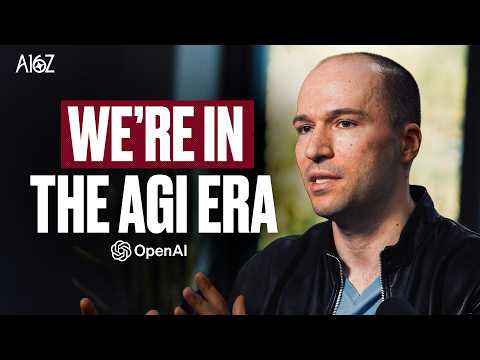
Greg Brockman Says AGI Has Arrived
Ben HorowitzErik TorenbergGreg Brockman
Greg Brockman says Astra is “pretty reasonable to call ...AGI,” with coherent 24-hour runs across domains and a discontinuous jump driven partly by computer use that reduces reliance on purpose-built connectors.OpenAI shifted 25% of production engineers to security, saturated Astra’s identifiable P0s, and committed $1B plus discounted CrowdStrike access, but compute distribution and safety, security, and alignment may become the next binding constraints.