SHOW DIRECTORY
The a16z Show
The venture firm’s view of startups, AI, software, markets, company building, and the technological shifts creating new categories.
BIDCLUB DESCRIPTION

Amazon CEO: $220 Billion Still Can’t Meet AI Demand
Andy JassyBen HorowitzErik Torenberg
Amazon expects about $220 billion of 2026 CapEx, yet AWS capacity is sold out for 2026, largely for 2027, and partly for 2028; AWS AI has exceeded a $25 billion revenue run rate.Data centers require investment roughly two years before monetization, pressuring free cash flow; broader enterprise inference adoption also hinges on costs Jassy still calls an order of magnitude too high.
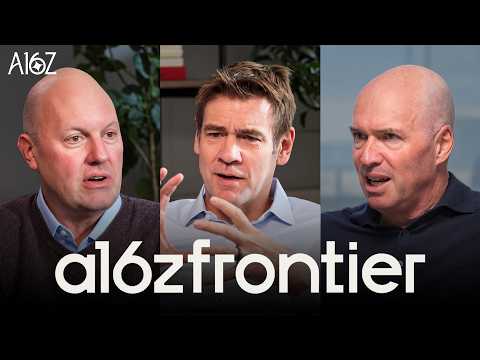
The Frontier Ideas a16z Wants to Fund Now | Marc Andreessen, Ben Horowitz & Chris Dixon
Marc AndreessenBen HorowitzChris DixonErik Torenberg
a16z is expanding the ACC Crypto Fund into a16z Frontier for “outer planets” beyond existing verticals as crypto’s boundaries blur with fintech and Wall Street.Marc Andreessen calls AI’s early-adopter gap with incumbents the widest of his career; employees adopting ahead of companies could fuel startup formation, while AI answers and Stack Overflow’s traffic drop point to an internet-economics reset.
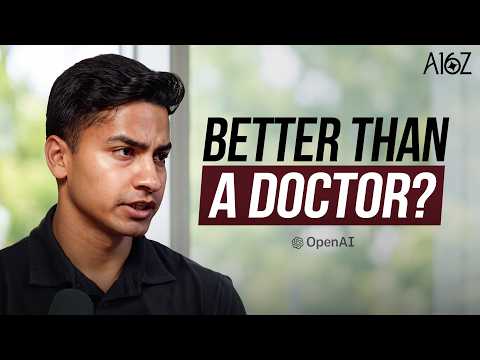
Should You Trust ChatGPT With Your Health?
GPT-6 Luna, OpenAI’s cheapest frontier API model, beat 5.6 Sol on HealthBench Professional at 34 times lower cost.Singhal sees a path to commoditized health intelligence, but says it has not yet affected the $5.3T US spend; savings require workflow integration.Epic, UCSF, and AdventHealth offer deployment evidence, including roughly 80% lower administrative workflow costs reported by AdventHealth.
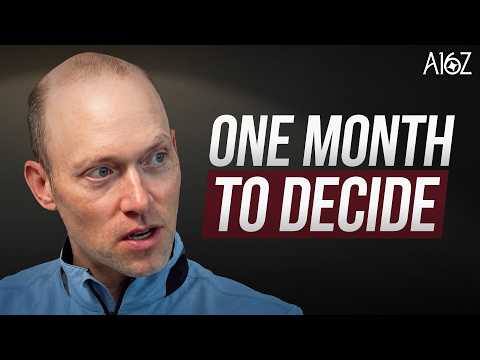
Why a $1M Startup Wasn’t Worth Building in the Age of AI
Town abandoned a tax business nearing $1 million in first-year revenue as annual demand and weak word of mouth favored incumbents.Its consumer-first assistant applies cheap tokens to concrete jobs, including supplier monitoring that may save restaurants hundreds or thousands.The test is whether reusable workflows deliver recurring value before model labs replicate them.
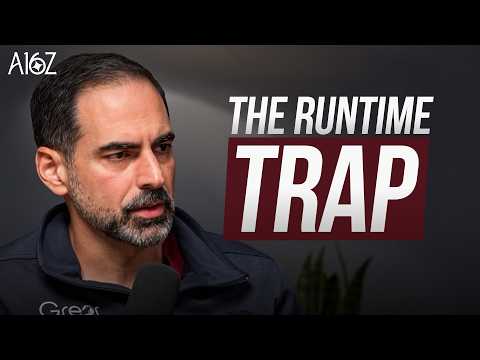
Why AI Can Write Code But Can’t Keep It Running (Yet)
AI coding has moved beyond autocomplete: Martin Casado built data-lake auto-promotion production code in 10 days versus roughly six months historically, a 10- to 20-fold gain Jad Naous says favors engineers already strong in systems.Grepr’s 90% telemetry-cost reduction offers a concrete commercial wedge, while anomaly-led diagnosis works internally and with a few customers; autonomous cluster management remains “not yet.”
What Happens When AI Agents Can Spend Your Money?
Payment credentials turned agents from “spectators to actors,” igniting wallet competition among Stripe Link, Shop Pay, and PayPal.Open-standard agentic tokens rose from zero to a few million weekly in three months; VGS, the largest provider, vaults about a third of e-commerce by GMV.They preserve chargeback rules and follow-on purchases, but liability for agent errors remains unresolved.

Can Open Models Keep Up With OpenAI and Anthropic? | Nathan Lambert
Lambert estimates distillation may give Chinese labs a few months, but its value in RL-heavy post-training remains unclear.Closed labs integrate inference and lead coding, where revenue has gone from zero to $100 billion, while open-model economics fragment builders, inference firms and post-training companies.Open models may still win buyers seeking owned weights and the cheapest adequate model.

Recursive Self-Improvement and the Future of AI
Martin CasadoDhaval AdjodahOwen He
RSI founders Dhaval Adjodah and Owen He report early signs of performance rising as resource use stays flat or falls, with the model itself as optimizee.They cite retraining GPT-2 in hours for about $100 on the same GPU and data, and target inference efficiency across the stack.Casado has not seen equivalent GPT-5 evidence, leaving scalability beyond fast-evaluation tasks unresolved.

Former Intel CEO: Why This is the Best Time to Build Hardware
Raghu RaghuramGuido AppenzellerPat Gelsinger
AI is compressing logic design faster than silicon, packaging, and rack deployment, shifting value toward manufacturing, memory, power, cooling, and integration.With roughly 100 AI processor vendors, consolidation is likely as workloads evolve and winners require major capital, software, and customer backing, though agent-generated kernels may preserve some heterogeneity.Memory may be positioned for its first major reset in 30 years, while optical scale-up I/O around 2028–2029 and power shortages, including eight-year turbine lead times, define key catalysts and risks.
Building the Cloud for AI Agents | AWS CEO Matt Garman
AWS is underwriting durable AI demand with $220 billion of 2026 capex while reserving scarce accelerators for startups as well as frontier labs.Positive-ROI production workloads and single-digit maximum customer concentration temper demand risk, while AWS plans to buy 2 million NVIDIA GPUs over the next couple of years.Agentic workloads may strengthen AWS’s architectural edge, but power, memory, chips and enterprise evaluation remain constraints to monitor.