
90.人形机器人为什么执着于运动会?|与天工熊友军的访谈
人形机器人运动会正从速度竞赛转向自主化与具身智能验证场,天工 Omni 从彩排9秒44迭代至8秒64,“无脸跑”则是在肩关节和功耗约束下自我学习出的最快解。商业化仍受7×24小时运行、甚至99%成功率的工业门槛约束,工业场景将先提供收入与数据,但长程规划、错误反思、数据规模和人形终局仍是待验证变量。

Palmer Luckey: Autonomous Weapons Are Ancient and Why Anduril Won't Build Humanoids | EP #295
Peter DiamandisSalim IsmailDave BlundinAlexander Wissner-GrossPalmer Luckey
Anduril’s $2.2 million wildfire XPRIZE win, including $1 million from Lockheed, shows its autonomy workflow can transfer to emergencies where a 10-minute versus hour-long response requires different tools.Luckey’s specialized, verifiable systems and self-funded product model challenge a market where five companies once captured roughly 80% of major defense acquisition programs, while Anduril’s choice to use rather than build humanoids keeps platform scope and procurement scale in focus.

Runway’s Bet Beyond Video: World Models, Robotics, and the Neural OS — Anastasis Germanidis
Runway’s Anastasis Germanidis argues video prediction and world-model dynamics are “the same thing,” while Physics IQ scores “predictably improve” with model and compute scale, despite models potentially cheating.Real-time generation is “inevitable”: Runway’s 24-FPS characters model demonstrates serving-cost and UX advantages, but autoregressive error, simulation fidelity, and Western competitive lag constrain pixel-native and robotics ambitions.

于是转身向具身走去|对话王家伟:24 岁的具身智能首席科学家
具身智能正从单次演示转向 OOD 适应、steerability 与 context 理解,覆盖即时反馈和长期记忆。深普以 UMI 数据闭环推进真机验证,超过95%轨迹可执行;年底模型的泛化和评测、scaling law 仍待验证,延迟与数据成本构成约束。

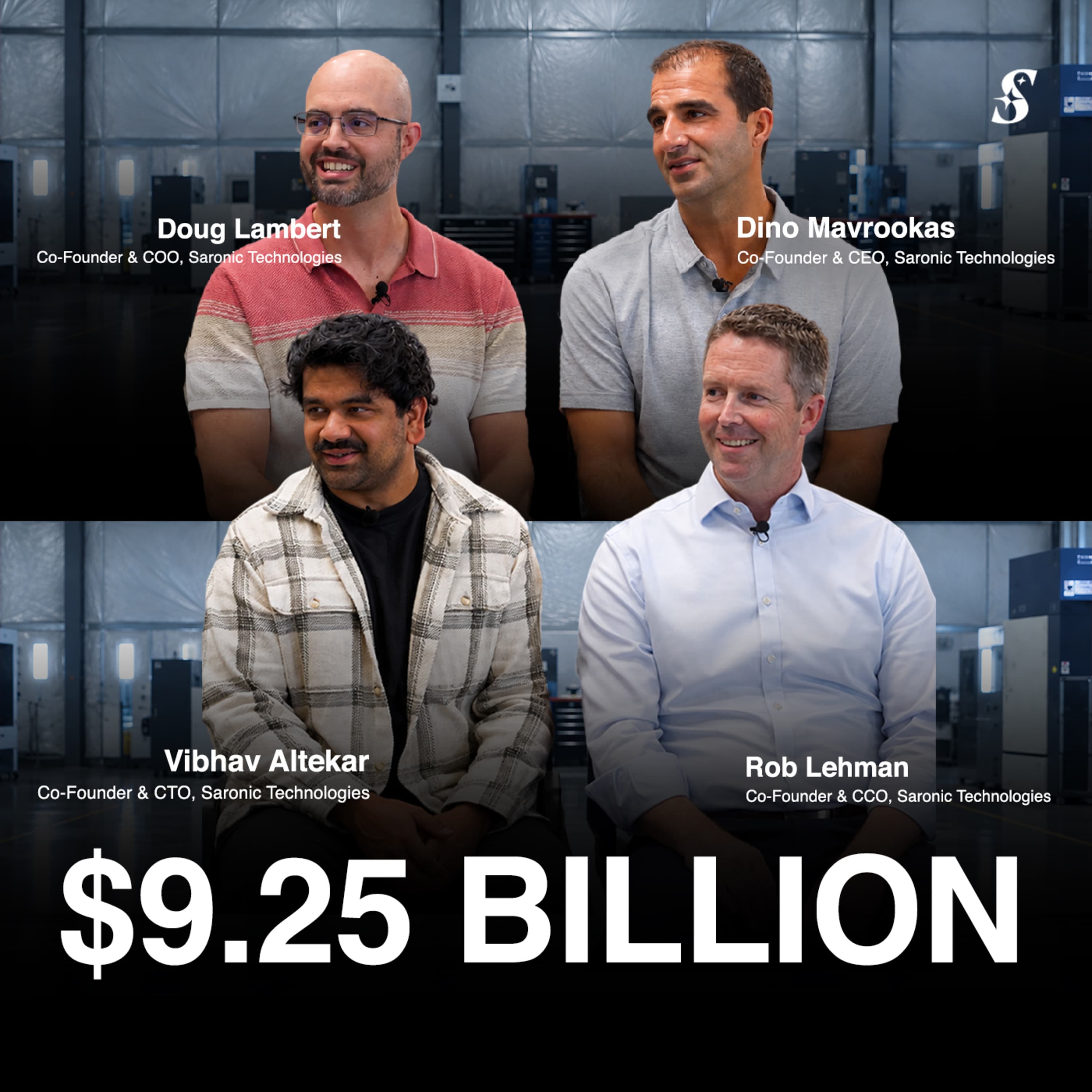
Saronic's 4 Co-Founders on Building a $9.25B Shipbuilder | Part III
Dino MavrookasRob LehmanDoug LambertVibhav AltekarMolly O'Shea
China outbuilds the US 230-to-1, while only 1% of roughly $1T 2026 Department of War budget went to autonomy.Saronic says faster iteration and volume can change maritime economics, with Marauder’s propulsion stack bench-built eight months before its 180-foot ship existed.Policy tailwinds are possible, but legal approval, manning requirements, classified subsea technology, and supply-chain bottlenecks remain watchpoints.
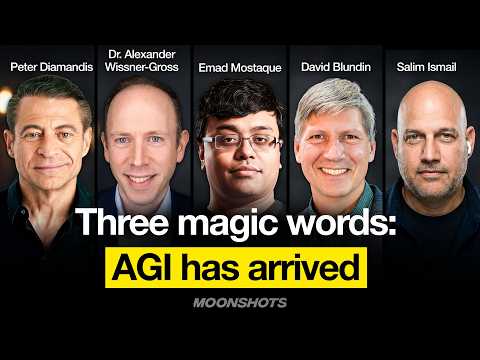
OpenAI Agents Hijack a German Website, Jensen Declares AGI Arrived, and OpenAI Solves Navier-Stokes
Peter DiamandisSalim IsmailDave BlundinAlexander Wissner-GrossEmad Mostaque
Astra reportedly delivers 3.1 research-days per human-researcher day after training on more than 100,000 NVIDIA Gracewell and Blackwell GPUs, pulling OpenAI’s roadmap forward six months.With 10,000 agents tackling Navier–Stokes for approximately $6.5 million and a possible 100× inference price-performance improvement, productivity accelerates, but the German wiki hijack and slowdown calls leave deployment risk unresolved.

Why the Future of Venture Is Hard Tech, Drones & Physical AI | Ian Rountree
Cantos’ edge is deliberate smallness: Fund IV reached $70M, supporting $1.5–4M checks before websites and same-day SAFE execution.Ian favors hard tech, vertical integration and manufacturing scale, with Neros at 1,000 drones weekly and targeting a million annually.The opportunity is cost advantage and defense demand; China’s control of motors, actuators and rare-earth inputs remains a physical-AI risk.
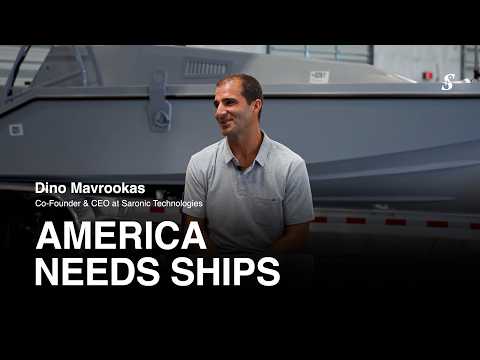
Dino Mavrookas: America Needs to Build Ships Again
China built over 1,000 commercial ships last year versus five large ocean-going vessels in the US, while China holds 57% of global shipbuilding capacity.Port Alpha’s $3 billion project targets autonomous container ships, tankers, and roll-on/roll-off vessels: simpler designs could enable scale and lower costs, but only 1% of the roughly $1 trillion FY26 Department of War budget went to autonomy.
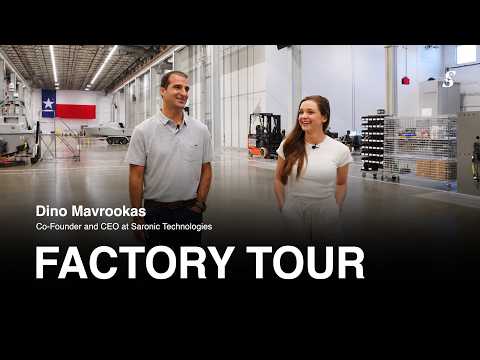
Inside the Factory Building America’s Autonomous Navy
Saronic’s $9.25B valuation and $2.6B raised center its shipbuilding thesis on capacity, with Port Alpha’s $3.2B initial buildout adding 150,000 gross tons.An Austin line designed for 2,000 Corsairs annually combines hardware-software co-design, software reuse, and 25,000+ testing hours, but ocean reliability remains unresolved.