After The Builders: On Palmer Luckey and Alex Karp
Walter IsaacsonOz WoloshynBlake J. HarrisMichael SteinbergerDavid Ignatius
Palantir’s 2016 Army lawsuit victory opened procurement access, while Anduril’s self-funded development shifts risk onto the company before buyers are secured.Ukraine’s systems turn over every few weeks, making software iteration central: Starlink supports communications and drone command, while Palantir integrates targeting data.Anduril’s eventual IPO could test public appetite for defense firms that assume development risk; meanwhile, autonomous weapons’ precision claims leave accountability unresolved.

Elon Musk on Why the Future Should Make You Glad to Be Alive | TomorrowX Summit
Elon MuskGavin BakerAntonio Gracias
Starship’s cost thesis depends on successful booster and ship recovery enabling full, rapid reuse, which Musk says could cut access costs 100-fold, perhaps eventually 1,000-fold.That scale could support a million tons of annual mass to orbit, but the economics depend on achieving the reuse and launch cadence first.

Russia-Ukraine War: Putin, Zelenskyy, Trump and the Future of Warfare | Lex Fridman Podcast #504
Lex FridmanPreston StewartMichael Kofman
Kofman calls 2026 Ukraine’s best year of ground combat since summer 2023, while strikes on energy, transport and civilian infrastructure make winter a test of economic resilience.Each side fields 8,000–10,000 FPVs daily, but small teams, maintenance and repeated attacks keep labor and production central to drone warfare.Russia has resources to fight into 2027, while a ceasefire without security guarantees could leave Ukraine vulnerable after demobilization.

Planet Labs Factory Tour
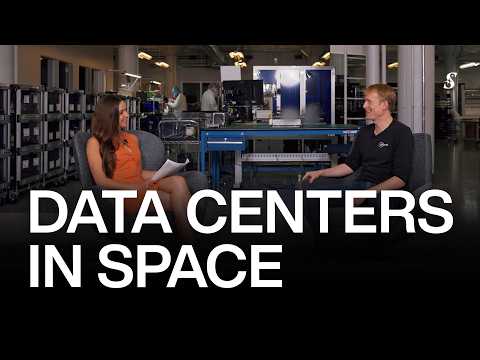
Marshall says Planet’s 700 satellites built over 15 years cost less than one typical NASA satellite—a roughly 1,000X reduction—while imagery and analytics carry very high margins.About 200 satellites image the Earth daily; Owl raises resolution from three meters to one and returns data 10 times faster.The AI archive could broaden access, but its public beta failed to trigger the intended Area 51 search.
Planet Labs CEO: Why AI Data Centers Will Move to Space
Planet grew 58% year-on-year last quarter; Marshall thinks defense supplied the largest share.Sovereignty is driving fleet orders: Sweden's first satellite launched four months after signing, versus the industry's usual five or 10 years.Google’s Suncatcher test launched last week, but TPU testing remains ahead; Marshall says orbit could provide five times more power per panel and make computing cheaper.
Inside Starcloud’s $2B Space Factory
Molly O'SheaPhilip JohnstonEzra FeildenAdi OlteanBailey MontañoMiguel RiveraCamilo Lopez
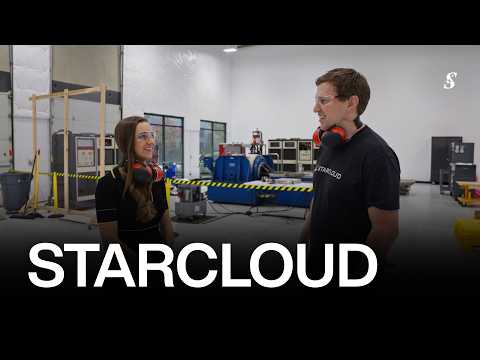
Orbital compute’s cost case hinges on launch falling below roughly $500/kg, versus about $5,000/kg on Falcon 9.Government customers are testing radar and hyperspectral inference, aiming to turn large image downlinks into actionable coordinates in minutes; Starcloud 2’s planned January launch tests radiator claims.Johnston says a 10% or 20% higher chip failure rate in space could break the economics, despite three months of chip burn-in.

How to Build the Next SpaceX or Tesla
Erin Price-WrightConnor LoveElena Burger
Defense customers can fund capacity commercial buyers would reject, creating a base that also serves robotics markets.Technicians using Claude can reconfigure lines in 20 minutes, versus three months and hundreds of thousands of dollars through a systems integrator.Love says first-half 2026 defense risk capital exceeded all of 2025, but factories still take years to build.

Freedom of Action: America's ASI Strategy, w/ RAND's Joel Predd, Ben Boudreaux & Matt Chessen
Nathan LabenzJoel PreddBen BoudreauxMatt Chessen
RAND urges the U.S. to build capabilities before choosing among seven ASI strategies, since five unresolved questions could change which path is viable.Its 106-capability agenda spans verification, evaluations, secure data centers and incident response, but remains unpriced; as frontier models diffuse, Chessen warns of a possible 12–24-month cybersecurity rough patch.
The company building underwater drones for $50,000
John CollisonChris SaccaWill O'Brien
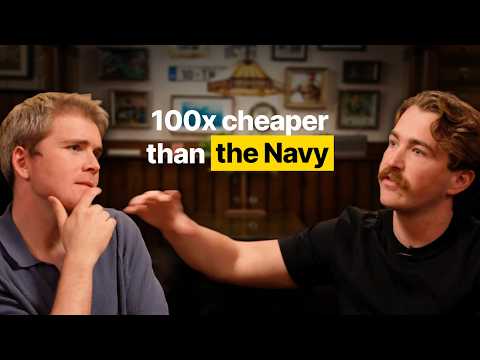
Ulysses’ Mako can sell for as little as $50,000 to navies versus roughly $5 million for the common U.S.Navy autonomous underwater vehicle, while Leviathan supports persistent, modular missions.Demand already exceeds manufacturing capacity, with a factory planned next year; slow procurement could become a moat once deployments make undersea monitoring sticky and bankable.
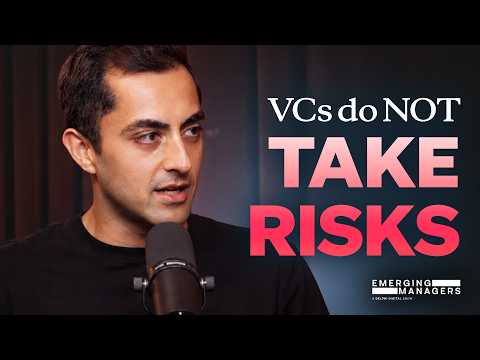
Most VCs Are Afraid to Be Wrong | Rohan Pujara
Pujara avoids consensus-heavy seed categories where inflated prices, copycats, and weak margins destroy early economics, underwriting distinctive founders instead.Valhalla’s $80 million–$100 million fund makes only two to four new investments annually and can concentrate 20%–30% behind a clear fund-returner.K2 Space’s more than $1 billion of signed business and $6.8 billion valuation illustrate the playbook, while the roughly 30-check diversification case remains unresolved.