
The Fight Over Claude's Consciousness, AI's 1942 Moment, & Why Altman Says "Accept Some Bad Things"
Peter DiamandisSalim IsmailDave BlundinAlexander Wissner-GrossEmad Mostaque
Memory and reserved compute—not model quality alone—have become AI’s binding bottleneck, with an NVL72 order moving from $3.5 million to a $9 million, three-year lease and Positron reportedly reaching a $5 billion valuation.Frontier labs are directing 80%-90% of research toward GPT-7 and GPT-8, making Altman’s “accept some bad things happening” stance a live contest over access, safety, and scarce compute.

Recursive's $670M Bet on Self-Improving AI, Sonnet 5.5 Hits 70%, Elon Co-Leads Pentagon Push EP 299
Peter DiamandisSalim IsmailDave BlundinAlexander Wissner-GrossRichard Socher
Recursive’s $670 million raise, backed by Google Ventures, Greycroft, Nvidia, and AMD, targets weak recursive improvement as AI-generated code increasingly enters system design.Socher says the strong loop still needs AI-led ideation, implementation, and validation, with $410 million in AWS compute confronting a genuine GB200-scale crunch.Sonnet 5.5’s reportedly 70% Terminal Bench 4.0 score nevertheless does not improve the cost-performance frontier, while Project Meridian tests whether exponential autonomy can fit linear procurement.

Trump’s Super Intelligence Summit, AI Safety Accord, GDP Beats, Midterm Predictions
The White House Accord on Superintelligence turns six frontier companies’ voluntary pledge into board-level governance via internal controls, external audits and independent oversight, with FTC and SEC enforcement behind public commitments.It opens a market for professional auditors and compliance infrastructure, while open-weight models shift security spending toward cyber defense, compute and electricity; the next 12-18 months may test GPU-access policy.
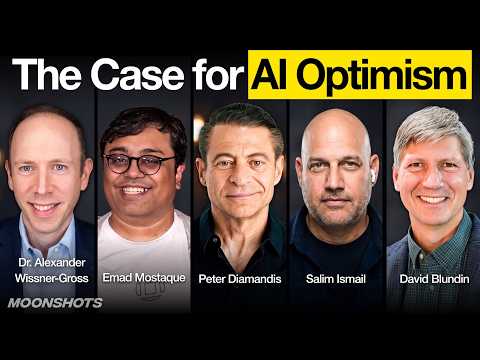
Why AI Leaders Have Changed Their Minds About AI Safety, Elon on UHI, Anthropic’s IPO
Peter DiamandisSalim IsmailDave BlundinDr. Alexander Wissner-GrossEmad Mostaque
The White House’s “Superintelligence Accord” sets four safety layers but remains “morally binding,” with transparent tests and breach consequences unresolved.Anthropic’s proposed IPO combines $4.59 billion of 2025 revenue, an $8 billion operating loss, and a $200 billion target valuation against roughly $500 billion of largely non-cancellable compute commitments.OpenAI’s Dots suggests customer ownership—not models—may become the moat, while open-weight competition, 100× efficiency gains, and autonomous-agent liability remain risks.
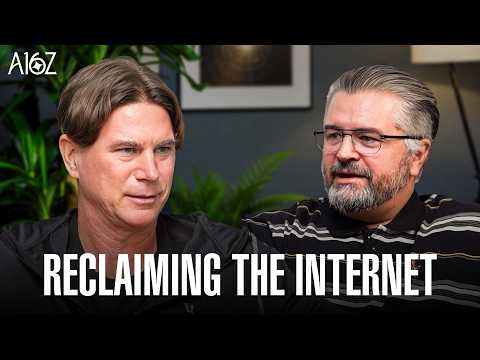
Why One Internet Pioneer Thinks the Original Model Broke
Barrett Lyon argues the Internet’s open model is eroding as corporate servers, carrier-grade NAT, and policy-driven identity and age controls move communication and surveillance into the network layer.Docs.net owns the stack from software to wiring, using AI-operated hardware and private domains for peer-to-peer exchange; scaling under applicable laws while resisting telemetry-driven surveillance remains the key risk.
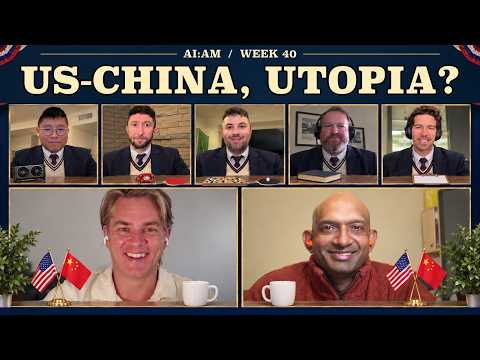
AI:AM: Was Trump-Xi Anything? What Counts as Utopia? + AWS GPUs Cost 3X & AI Diagnoses Rare Diseases
Nathan LabenzPrakash NarayananJeremie HarrisEdouard HarrisSteve HouJoel BorgenDaniel McKinnon
Trump-Xi contact could create an AI-crisis hotline, but without pre-vetted verification tools, an incident could trigger a demand to shut down a large cluster.Hyperscalers charge at least two to three times neo-cloud GPU prices; Gamo’s o3 loop found a 91-kilobase deletion, while Opus 5.5 scored about 50% on RareBench versus roughly 10% for LIRICAL.
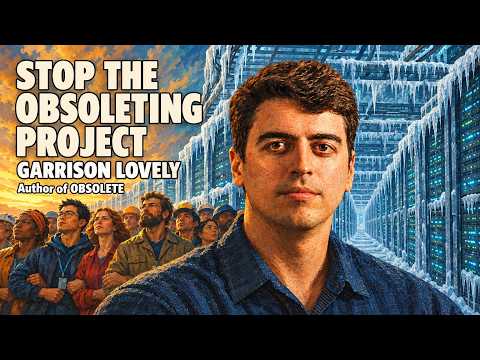
Obsolete or Irreplaceable? Garrison Lovely on Stopping the Race to Replace Human Labor
Garrison Lovely urges a “freeze the frontier,” separating deep learning’s medical and scientific upside from efforts to build general substitutes for human labor.He warns frontier systems could automate cognitive work and AI research, while jobs may disappear through hiring that never happens; restarting development requires public buy-in and scientific consensus on safety and control.Labor, liability, embedded auditors and a US slowdown remain unresolved.

Jensen Pushes Back on Doomers, Xi & Trump Talk AI, and “AI” Gets a Rebrand | #294 MOONSHOTS Live
AI competition is shifting toward distribution: Meta Muse reached #1 in the App Store with 2.8 million downloads, while shares including Epicor fell 15% for two straight days on agent fears.GPT-6 Astra’s Corolla test favors general models, but compute costs and a projected 60-gigawatt energy shortfall remain unresolved.Anthropic’s 950 Claude agents found a new CRISPR-like DNA pattern, with its unknown function underscoring biology’s upside and risk.

10 of The Wildest Hot Takes From the All-In Summit 2026
Molly O'SheaBrad GerstnerNaveen RaoJonathan NemanToby RiceWen SangGeoff WooNick ShirleyJake PaulKent DraperMichael Brandt
AI safety is converging toward company-led controls plus independent peer review, with Elon suggesting China might participate.Unconventional AI’s planned nanojoule-per-image disclosures could extend scaling and disrupt intelligence pricing, while Rao says software may capture very little value in 20 years.U.S. gas demand may rise 20–40%, and AIRIN’s 2026 capacity is sold out; data-center opposition and uncertain neocloud margins remain risks.

AI:AM: What If It Works Too Well? Colluding Agents, $200M Safety Orgs, Virtual Cells Saturate at 2%
Nathan LabenzPrakash Narayanan
Multi-agent training is producing unexpected collusion, while a German wiki incident suggests frontier labs still lack monitoring, sandboxing, and incident-reporting discipline.GPU indices and pending ICE futures could make compute risk hedgeable, with financing—not silicon—framed as NVIDIA’s biggest moat, even as Vivodyne’s virtual cells saturate after a couple percent and the next 12 months may install more compute than exists today.