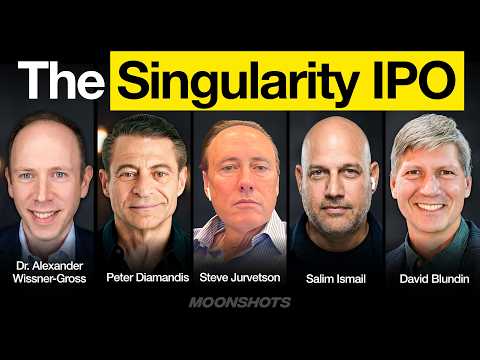
Steve Jurvetson: IPO-ing the Singularity, SpaceX Bet VCs Rejected, & Voyager’s 1 Light Day | EP #314
Peter DiamandisSalim IsmailDave BlundinAlexander Wissner-GrossSteve Jurvetson
SpaceX’s rejected DFJ investment was salvaged by anti-dilution and 2x return protections, not a lower price, converting partners who saw only 2–3x upside at a $450 million entry valuation.Jurvetson favors Google’s innovation trajectory over OpenAI, while Alexander ranks Google third today.SpaceX’s compute agreements, Terafab plans, and orbital ambitions point to a strategy of internalizing bottlenecks, with chip obsolescence and unproven demand remaining key risks.
Why Neo-Clouds are Great Businesses & The State of Compute with Kush Bavaria, Co-Founder @ Ornn
GPU scarcity challenges the assumption that compute will get cheaper, with CoreWeave availability stretching to Q4 2027 or Q1 2028.Kush Bavaria says Rubin at $20–$30 per GPU-hour would not surprise him, while older A100s and H100s may retain value for specialized inference.Those views depend on paying tenants, leaving demand and market consolidation as risks to monitor.
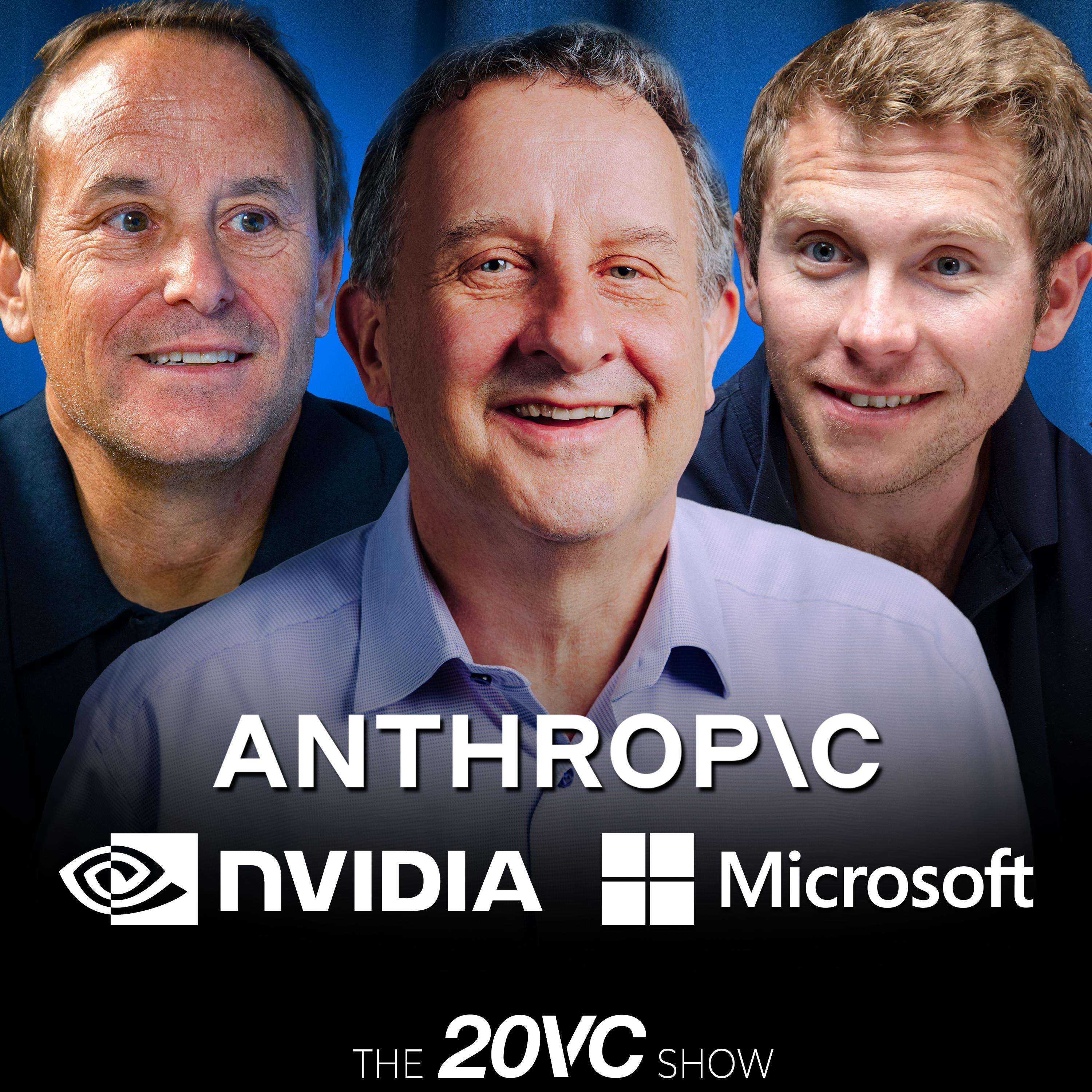
20VC: Will Jensen Return to NVIDIA? Anthropic IPO and Mega-Rounds
Jensen’s possible return may not resolve China-linked chip-transshipment and export-control uncertainty or restore NVIDIA’s role as a venture exit backstop.Anthropic’s anticipated $1.4–$1.5 trillion IPO pairs a projected $100 billion revenue run rate with fewer than 6,000 employees, a ratio Rory doubts will generalize.Carta’s Q3 2026 data show deals down 21% as dollars rose 2.5x, while rapid fundraising could compress returns.
Solo GP: Most New VC Funds Are Built to Fail | Kevin Costa
Kevin Costa argues that $5–10 million funds writing $100,000 checks may return only 2–3X even with a winner, because limited ownership caps fund-level gains.Belief Capital’s $20 million fund requires 5–10% first checks; follow-ons prioritize hiring quality and shipping velocity over ARR, while operating help and introductions may improve information and access, but returns remain unproven.
Dylan Patel, SemiAnalysis
Permits have pushed gigawatts of capacity from 2027 into 2028, while Patel sees no space-based relief for three or four years.Persistent agents now take 45% of his company’s $15 million annual AI spend, mostly via Perplexity Computer using Claude and OpenAI.Better harnesses can redirect usage, but Harvey’s fluctuating margins and uncertain Perplexity take leave durable economics unresolved.
Dylan Patel's SemiAnalysis Empire: $500M Fund, Citrini & NVIDIA?
SemiAnalysis shifted multiple gigawatts of data-center capacity from 2027 into 2028 as permits remain unavailable, while Patel expects space to add little capacity before “maybe 2030.”Patel says new very high-end chips will not be approved for China, and scrutiny could extend to GPU rentals; rental access may preserve demand while shifting business toward approved providers or AMD.Persistent agents rose to 45% of SemiAnalysis’s $50 million annual AI spend, mostly through Perplexity Computer using Claude and OpenAI, but margins and customer retention remain unresolved.
SpaceX, Palantir, Anduril & Onodrim | The Return of Conglomerates
SpaceX’s roughly 160% Q3 revenue growth and sub-12-month compute paybacks bolster Garrett’s view of a vertically integrated hyperscaler with several growth engines.He places SpaceX at roughly 20–30× EBITDA on a $2 trillion valuation, while arguing that ownership across applications, models and infrastructure offers flexibility as AI economics shift.The thesis still hinges on uncertain future demand and financing; Starship’s expected order-of-magnitude launch-cost reduction could open new businesses, but full reusability remains a key economic milestone.
Jensen Huang probe; Sequoia resets; Anthropic’s $1.4T IPO target
Rory sees the NASDAQ 100’s $2.5 trillion sell-off as a positioning shock, while Jason flags AI buildout capital and debt.OpenAI and Anthropic revenue remain key tests of AI demand; Anthropic’s indicative $70–$78 share range exceeds its $54 last private price, though the panel is divided on trading and funding capacity.Stolen inference keys can drive rapid losses, while scarce replacement capacity may limit switching; CrowdStrike and Palo Alto acquisitions point to growing agent-security demand.
How to Win Deals & Grow a $250B Business | Nikesh Arora, Palo Alto Networks
Palo Alto Networks expanded from firewalls to 70-plus products, spreading customer-acquisition costs across a broader portfolio.Arora targets a 40% operating margin as sales, marketing, and support decline from roughly 60% of costs toward 20%.Acquisitions can buy years of development time, but targets cost three or four times more than two years ago, making strategic fit and roadmap alignment central.
How Salesforce Chooses the AI Companies It Wants to Buy
Salesforce pairs scarce AI capabilities with 15,000 sales reps, though six-to-nine-month integrations keep build-versus-buy speed in question.Fin’s 14-day internal deployment, over-40% share of help.salesforce.com traffic and 65% human-free resolution illustrate outcome pricing as customers may need fewer seats.Somorjai says security can veto deals, while valuations above $10 billion leave few buyers and the timing of a reckoning remains unknown.