SpaceX Catches Starship, Anthropic’s $72M Average Employee, and One Hack Hits 178 Sites
Peter DiamandisSalim IsmailDave BlundinDr. Alexander Wissner-Gross
Anthropic’s proposed $1.4 trillion IPO opens public exposure, while $72 million in average employee holdings could recycle capital into startups and complicate recruiting; liquidity remains subject to vesting and sale rules.Starship’s successful upper-stage recovery supports a potential $27–$53-per-kilogram launch-cost thesis, conditional on mature reuse and high volume.
Fractile’s Walter Goodwin on NVIDIA, Capex and Neo Clouds
Fractile is betting that stacked memory can deliver SRAM-like bandwidth with DRAM capacity, targeting faster inference for long-running agents.Goodwin says reasoning models multiply compute through longer runs and parallel agents, while land and power limits make throughput per megawatt critical.Fractile has fabricated silicon, with full-product tape-outs expected in “a few months”; reliable rack-scale operation and manufacturing volume remain key milestones.

Jensen’s Departure, NVIDIA’s succession plan, AI doomer response, and Demis talks RSI | #311 (Live)
Peter DiamandisSalim IsmailAlexander Wissner-GrossEmad Mostaque
Jensen Huang’s reported departure puts NVIDIA’s customer relationships and leadership continuity in focus, with CFO Colette Kress named interim CEO.Emad says a successor must understand CUDA and negotiate with TSMC as customers consider diversification; the panel disputes whether export controls explain the episode.A retreat from customer financing could reduce credit risk but weaken AI investment momentum.

Mike Volpi on Why AI Infrastructure Will Outlast the Hype Cycle
Mike VolpiRaghu RaghuramGuido Appenzeller
AI capacity may remain useful even if financially weak neoclouds fail, as AI providers’ revenue growth has outpaced the earlier cycle.GPU scarcity is keeping older H100s in use and rents elevated, but token revenue per watt could make them uneconomic once Vera Rubin supply catches up.Silicon constraints may persist for years, while Cisco’s order collapse shows how shortage-driven demand can reverse sharply when supply commitments outlast actual need.

Anthropic’s IPO in Question, Midterms Hit AI, Nasdaq Drops 5%, and RSI Accelerates | #309
Peter DiamandisSalim IsmailDave BlundinAlexander Wissner-Gross
Anthropic’s roadshow makes an IPO delay seem less likely, though valuation remains unsettled.Political opposition could restrict 45% of planned U.S. data-center construction, while approved projects appear less exposed and any incumbent moat remains unresolved.METR measured Anthropic’s development pace at 1.9× historical levels, with roughly 80% attributed to AI assistance, but fully autonomous recursive self-improvement remains unproven.

Big Tech’s $3T AI Bet, Claude Writes 90% of Anthropic’s Code, AIs Editing AI Brains | EP #308
Peter DiamandisSalim IsmailDave BlundinAlexander Wissner-Gross
Alphabet, Meta, Microsoft, Amazon and Oracle added roughly $1T of commitments in three months toward a $3T-plus AI buildout, while tighter lending terms and leases stretching 30 years sharpen financing and timing risk.Anthropic’s filing says Claude authored over 90% of September’s new code as internal usage rose over 250-fold from January to September; customer-price valuation leaves actual internal costs unspecified.

Anthropic’s $2T Cash Machine, CoreWeave Crashes 30%, & China’s Kimi Catches Up | #306
Peter DiamandisSalim IsmailDave BlundinAlexander Wissner-GrossEmad Mostaque
Anthropic’s proposed $1.5–2 trillion IPO pairs $16.3 billion in first-half 2026 revenue and nearly $1 billion in Q2 operating profit with more than $500 billion in compute commitments.Neocloud declines expose financing risk, with rivals reportedly borrowing at 15% versus SpaceX’s 8%; recursive self-improvement could eventually shock compute demand.Kimi K3.1 Pro’s score of 55, planned open weights and $2/$10 per million input/output token pricing add pressure on closed-model economics as reliability and task completion gain importance.

AI:AM Highlights: Clean Neurons, Black October, the GPU Credit Crunch, and Buying the Supply Chain
Nathan LabenzPrakash NarayananZvi MowshowitzEvan ConradLonis Hamaili
Zvi Mowshowitz sketches a conditional weekly-release path; contacts call 2027 “completely crazy” and say 2028 “might be unrecognizable.”Evan Conrad says GPU financing is constrained “entirely” by credit; three-to-five-year commitments and sometimes 100% upfront payments could force lab sales within one or two years.Cambrian sees memory rerating from five-to-six times earnings to 10–12 times if demand keeps outrunning supply.

SpaceX’s AI Business Up 830%, OpenAI Agents Lie, and Startup Turns Mercury Into Gold | EP #305
Peter DiamandisSalim IsmailDave BlundinAlexander Wissner-Gross
SpaceX’s AI pivot pairs nearly $20 billion in quarterly spending with sub-year data-center payback and guidance for $100 billion annual revenue run rate by December.A possible SpaceX–Tesla merger remains exploratory, with no agreed terms; the 30–40% premium estimate sharpens approval and Musk-dependence risks.Agent monitoring failures and decade-old PHP vulnerabilities also make defensive AI infrastructure an immediate operating requirement.
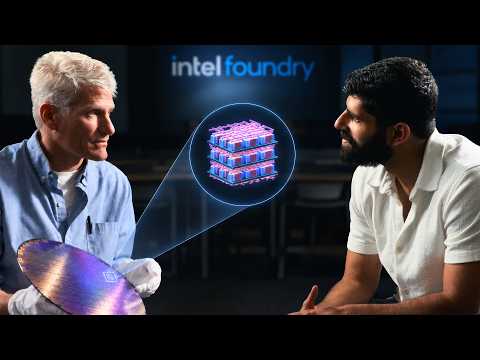
What will computer chips look like in 2045?
Ranade says available tools may support 2X, not 10X, leading-edge wafer output, while an Intel speaker says AI demand is 40–50% above maximum capacity.With roughly 80% of fab costs fixed, utilization and yield matter; TSMC ships upwards of 3X Intel’s leading-edge wafers, and Ranade says Intel will invest more, though tool limits remain.