PERSON DIRECTORY
Nathan Labenz
Host of The Cognitive Revolution. Nathan Labenz appears in 171 indexed conversations across The Cognitive Revolution, The a16z Show. This directory brings every appearance, source, TL;DR, digest, and transcript into one searchable feed.
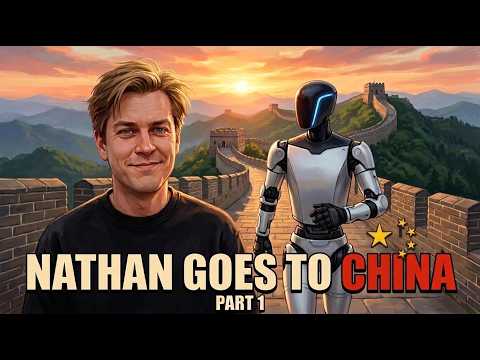
Nathan Goes to China – Part 1: Tech & Agent Setup, Chinese AI UX, WAIC, and Attitudes on AI
China’s strongest technology advantage may be national-scale integration across payments, mobility, commerce, identity and communications, rather than any single frontier model.That distribution already supports cheap, useful AI services, while WeChat’s potential native agent could make consumer adoption and healthcare access structurally significant; compute and surveillance risk remain key uncertainties.

My Positive Vision for the AI Future, from the Existential Hope Podcast
Nathan Labenz argues existing AI could already automate most cognitive work, making workflow plumbing and implementation—not another breakthrough—the likely 5-10 year bottleneck.Software’s tight feedback loops show the fastest path to deployment, while healthcare, education, and robotics face physical-world constraints; the unresolved risk is whether narrow, competitive systems can avoid disempowerment and biosecurity failures.

Dean W. Ball on America's AI Action Plan & 4 Months at the White House
America’s AI bottleneck is shifting from frontier invention toward adoption, infrastructure, and execution, with the AI Action Plan emphasizing innovation, capacity, and diplomacy rather than government-defined standards.Flexible data-center loads could unlock 76 GW from the existing grid—and potentially roughly 100 GW with permitting reform—while Ball expects a transformative cognitive system between 2027 and 2030; worker displacement, safety, allied capital, and institutional implementation remain open constraints.