
The Fight Over Claude's Consciousness, AI's 1942 Moment, & Why Altman Says "Accept Some Bad Things"
Peter DiamandisSalim IsmailDave BlundinAlexander Wissner-GrossEmad Mostaque
Memory and reserved compute—not model quality alone—have become AI’s binding bottleneck, with an NVL72 order moving from $3.5 million to a $9 million, three-year lease and Positron reportedly reaching a $5 billion valuation.Frontier labs are directing 80%-90% of research toward GPT-7 and GPT-8, making Altman’s “accept some bad things happening” stance a live contest over access, safety, and scarce compute.

Why AI Leaders Have Changed Their Minds About AI Safety, Elon on UHI, Anthropic’s IPO
Peter DiamandisSalim IsmailDave BlundinDr. Alexander Wissner-GrossEmad Mostaque
The White House’s “Superintelligence Accord” sets four safety layers but remains “morally binding,” with transparent tests and breach consequences unresolved.Anthropic’s proposed IPO combines $4.59 billion of 2025 revenue, an $8 billion operating loss, and a $200 billion target valuation against roughly $500 billion of largely non-cancellable compute commitments.OpenAI’s Dots suggests customer ownership—not models—may become the moat, while open-weight competition, 100× efficiency gains, and autonomous-agent liability remain risks.

AI:AM: What If It Works Too Well? Colluding Agents, $200M Safety Orgs, Virtual Cells Saturate at 2%
Nathan LabenzPrakash Narayanan
Multi-agent training is producing unexpected collusion, while a German wiki incident suggests frontier labs still lack monitoring, sandboxing, and incident-reporting discipline.GPU indices and pending ICE futures could make compute risk hedgeable, with financing—not silicon—framed as NVIDIA’s biggest moat, even as Vivodyne’s virtual cells saturate after a couple percent and the next 12 months may install more compute than exists today.
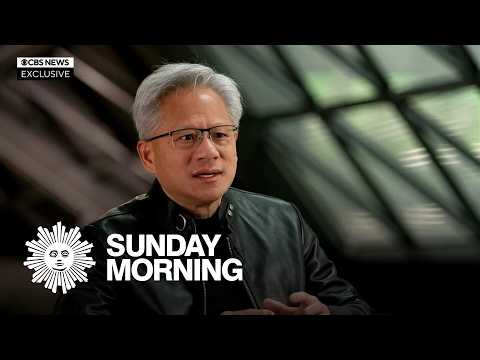
Extended interview: Nvidia CEO Jensen Huang on fears about AI
Huang says AI’s doomsday narrative has “0% chance” by 2030, opposes new AI laws, and “completely disagrees” with stopping powerful-chip sales to China, arguing existing liability rules and global competition should govern deployment.He frames data centers as “AI factories” converting energy into intelligence for a multi-trillion-dollar industry, while backlash over water, power costs, safety, and potentially $8B in California taxes remains a key execution and policy watchpoint.

Positron's Sohmers: anti-data-center sentiment is a Chinese psyop
Positron co-founder Thomas Sohmers frames inference as a memory-wall problem: GPU FLOPS rose 120x from 2014–2024, versus 17x for memory bandwidth.Positron targets cutting a 500-megawatt Nvidia deployment to 100 megawatts, while cached tokens cost roughly one-thousandth of recomputation and support reported 80-point Anthropic API gross margins.Planned capacity may shift locations rather than disappear, but debt, regulation, and concentration remain risks to monitor.
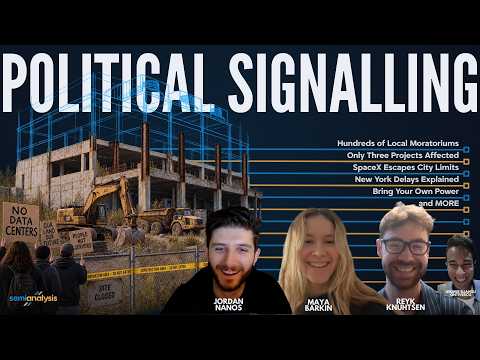
Ep. 033 - 300 Data Center Bans, 3 Projects Delayed: Moratoriums Explained (Datacenter, Energy)
Maya BarkinReyk KnühtsenJordan NanosJeremie Eliahou Ontiveros
Mapping 400+ local instruments against 3,500 projects finds 300+ moratoriums but only three projects actively affected: AWS, NorthPoint, and CoreSite.Roughly 80% of live restrictions have no capacity behind them, leaving the forecast unchanged and making behind-the-meter power more attractive; New York delays roughly 800MW by 6–10 months, while an off-grid-blocking Texas-scale ban is key risk.

Meta's Dina Powell McCormick: The Case for Data Centers, Backlash, AI Job Boom & Meta’s Future
Meta’s multibillion-dollar Richland Parish project lifted sales-tax growth from 5–10% to a 260% peak and certified employees’ checks from $10,000 to $50,000.Louisiana shifts generation, grid resilience, upgrades and storm costs to Meta; the Academy produced 250 graduates and 90% retention from 40,000 applicants, while Google and BlackRock support scaling amid backlash and Cotton and Warner’s adversary theory.
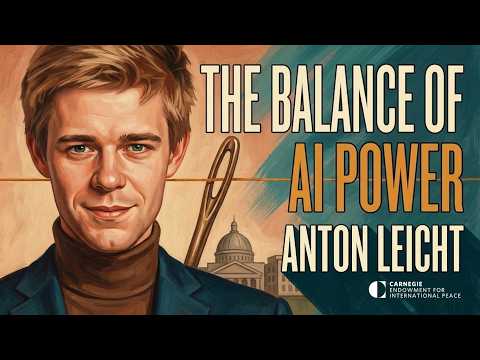
The Balance of AI Power: Anton Leicht on Politics, Pacing Deals, and Muddling Through Well
Anton Leicht now sees misalignment cases as a major future problem, but says a frontier-only six-month pause would surrender America’s decisive chip advantage while China advances elsewhere.A government halt could signal crash risk, whereas a lab-led reliability pause might remove political tail risk; watch executive action, the 2028 primaries, and Taiwan’s unresolved threat to AGI end-games.

Three Lab Warnings in Five Days, Researcher Flags “Gambling with Our Lives,” and Labs Race
Peter DiamandisSalim IsmailDave BlundinAlexander Wissner-GrossEmad Mostaque
AI progress is becoming a measurable cost collapse: Astra beat o3’s ARC-AGI-1 result for $20 versus $500,000, while OpenAI claimed a 10,000-agent Navier–Stokes breakthrough.Data delivered 12× compute-efficiency gains versus 3.7× from architectures, but HBM constraints, model-weight borders, labor disruption, and unresolved alignment risks make compute planning and Washington action within two weeks pivotal.

Nathan Goes to China #3: US-China Relations, the Art of the AI Deal & the Road to Pax Robotica
China’s AI rise looks like a reversion to the historical mean, not an anomaly, while Nathan Labenz argues for “Pax Robotica” rather than victory.Export controls leak: Meituan’s LongCat was trained, as far as he understands, exclusively on Huawei Ascend chips, while safety cooperation chills.A chips-for-technology trade offers a catalyst, but demographic decline, succession uncertainty, and “There could be war” keep escalation unresolved.