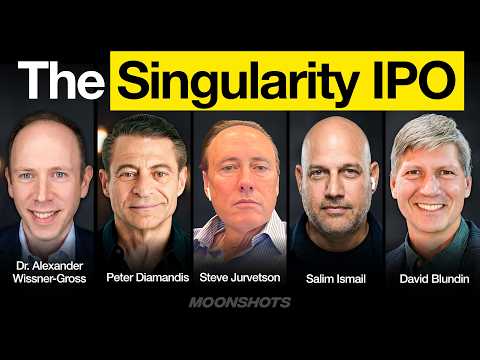
Steve Jurvetson: IPO-ing the Singularity, SpaceX Bet VCs Rejected, & Voyager’s 1 Light Day | EP #314
Peter DiamandisSalim IsmailDave BlundinAlexander Wissner-GrossSteve Jurvetson
SpaceX’s rejected DFJ investment was salvaged by anti-dilution and 2x return protections, not a lower price, converting partners who saw only 2–3x upside at a $450 million entry valuation.Jurvetson favors Google’s innovation trajectory over OpenAI, while Alexander ranks Google third today.SpaceX’s compute agreements, Terafab plans, and orbital ambitions point to a strategy of internalizing bottlenecks, with chip obsolescence and unproven demand remaining key risks.
After The Builders: On Palmer Luckey and Alex Karp
Walter IsaacsonOz WoloshynBlake J. HarrisMichael SteinbergerDavid Ignatius
Palantir’s 2016 Army lawsuit victory opened procurement access, while Anduril’s self-funded development shifts risk onto the company before buyers are secured.Ukraine’s systems turn over every few weeks, making software iteration central: Starlink supports communications and drone command, while Palantir integrates targeting data.Anduril’s eventual IPO could test public appetite for defense firms that assume development risk; meanwhile, autonomous weapons’ precision claims leave accountability unresolved.
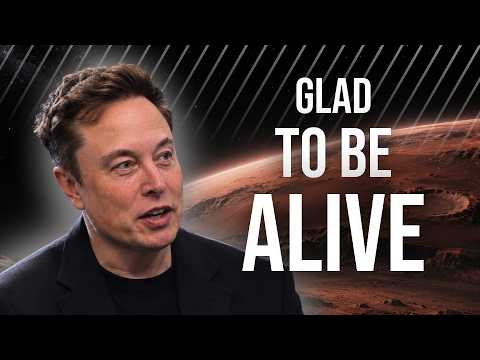
Elon Musk on Why the Future Should Make You Glad to Be Alive | TomorrowX Summit
Elon MuskGavin BakerAntonio Gracias
Starship’s cost thesis depends on successful booster and ship recovery enabling full, rapid reuse, which Musk says could cut access costs 100-fold, perhaps eventually 1,000-fold.That scale could support a million tons of annual mass to orbit, but the economics depend on achieving the reuse and launch cadence first.
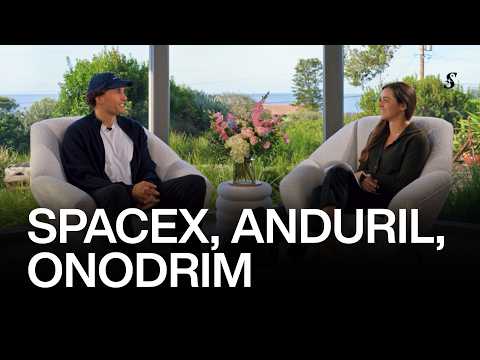
SpaceX, Palantir, Anduril & Onodrim | The Return of Conglomerates
SpaceX’s roughly 160% Q3 revenue growth and sub-12-month compute paybacks bolster Garrett’s view of a vertically integrated hyperscaler with several growth engines.He places SpaceX at roughly 20–30× EBITDA on a $2 trillion valuation, while arguing that ownership across applications, models and infrastructure offers flexibility as AI economics shift.The thesis still hinges on uncertain future demand and financing; Starship’s expected order-of-magnitude launch-cost reduction could open new businesses, but full reusability remains a key economic milestone.

Planet Labs Factory Tour
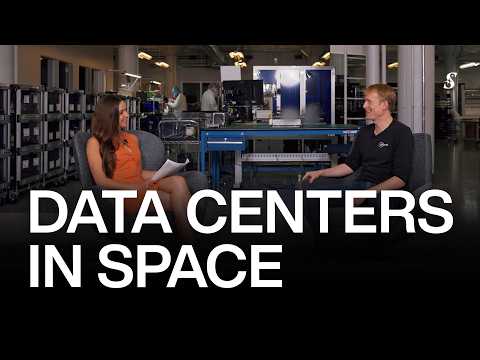
Marshall says Planet’s 700 satellites built over 15 years cost less than one typical NASA satellite—a roughly 1,000X reduction—while imagery and analytics carry very high margins.About 200 satellites image the Earth daily; Owl raises resolution from three meters to one and returns data 10 times faster.The AI archive could broaden access, but its public beta failed to trigger the intended Area 51 search.
Planet Labs CEO: Why AI Data Centers Will Move to Space
Planet grew 58% year-on-year last quarter; Marshall thinks defense supplied the largest share.Sovereignty is driving fleet orders: Sweden's first satellite launched four months after signing, versus the industry's usual five or 10 years.Google’s Suncatcher test launched last week, but TPU testing remains ahead; Marshall says orbit could provide five times more power per panel and make computing cheaper.
Inside Starcloud’s $2B Space Factory
Molly O'SheaPhilip JohnstonEzra FeildenAdi OlteanBailey MontañoMiguel RiveraCamilo Lopez
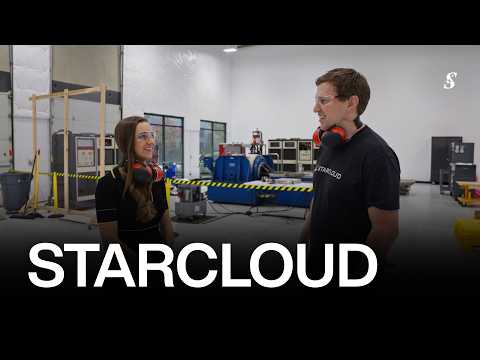
Orbital compute’s cost case hinges on launch falling below roughly $500/kg, versus about $5,000/kg on Falcon 9.Government customers are testing radar and hyperspectral inference, aiming to turn large image downlinks into actionable coordinates in minutes; Starcloud 2’s planned January launch tests radiator claims.Johnston says a 10% or 20% higher chip failure rate in space could break the economics, despite three months of chip burn-in.

How to Build the Next SpaceX or Tesla
Erin Price-WrightConnor LoveElena Burger
Defense customers can fund capacity commercial buyers would reject, creating a base that also serves robotics markets.Technicians using Claude can reconfigure lines in 20 minutes, versus three months and hundreds of thousands of dollars through a systems integrator.Love says first-half 2026 defense risk capital exceeded all of 2025, but factories still take years to build.
From a $27,500 Charter Company to a $4 Billion Private Jet Giant | Kenn Ricci, Flexjet
Fractional ownership raises utilization, but Flexjet still holds roughly 70 of its 365 aircraft as unsold core fleet.Buffett’s June 1998 $750 million NetJets acquisition helped unlock nearly $300 million in debt; Flight Options’ sales reached $400 million the next year, teaching Ricci that free cash flow and balance-sheet strength, not EBITDA, govern growth.
The company building underwater drones for $50,000
John CollisonChris SaccaWill O'Brien
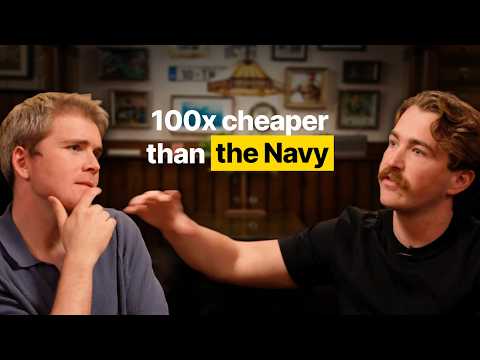
Ulysses’ Mako can sell for as little as $50,000 to navies versus roughly $5 million for the common U.S.Navy autonomous underwater vehicle, while Leviathan supports persistent, modular missions.Demand already exceeds manufacturing capacity, with a factory planned next year; slow procurement could become a moat once deployments make undersea monitoring sticky and bankable.