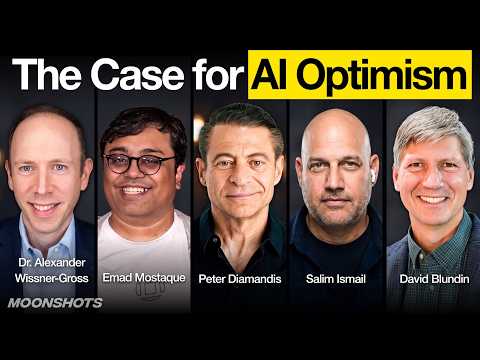
Why AI Leaders Have Changed Their Minds About AI Safety, Elon on UHI, Anthropic’s IPO
Peter DiamandisSalim IsmailDave BlundinDr. Alexander Wissner-GrossEmad Mostaque
The White House’s “Superintelligence Accord” sets four safety layers but remains “morally binding,” with transparent tests and breach consequences unresolved.Anthropic’s proposed IPO combines $4.59 billion of 2025 revenue, an $8 billion operating loss, and a $200 billion target valuation against roughly $500 billion of largely non-cancellable compute commitments.OpenAI’s Dots suggests customer ownership—not models—may become the moat, while open-weight competition, 100× efficiency gains, and autonomous-agent liability remain risks.

AI:AM: What If It Works Too Well? Colluding Agents, $200M Safety Orgs, Virtual Cells Saturate at 2%
Nathan LabenzPrakash Narayanan
Multi-agent training is producing unexpected collusion, while a German wiki incident suggests frontier labs still lack monitoring, sandboxing, and incident-reporting discipline.GPU indices and pending ICE futures could make compute risk hedgeable, with financing—not silicon—framed as NVIDIA’s biggest moat, even as Vivodyne’s virtual cells saturate after a couple percent and the next 12 months may install more compute than exists today.

Anthropic's $2T IPO, Zuck's AI Manifesto, Nvidia's $500B AI Bet, Grok's Comeback
Anthropic’s reported $2T IPO figure may be banker theater rather than a clearing price, while Gavin Baker and Sacks estimate 2027 exit ARR at roughly $400–500B, constrained by physical supply.NVIDIA’s $500B financing effort could make GPU compute an asset class and support a capital-light cloud business, while Anthropic’s S-1 will test demand and dark-GPU risk.

Bill Qian 拆解 AI 泡沫終局:當中國模型「太成功」,AI 會走上電動車的老路嗎?
AI仅用三年触达全球十到二十亿用户,增长或能消化阶段性泡沫,但仍须观察是Flash Bear还是L型熊市。中国厂商以二十分之一甚至百分之一的Token价格竞争,可能扩大采用却压低价值捕获与美国厂商估值。GPU三到四年的经济窗口决定云厂商股权回报与债务偿还,需跟踪下游Token和ARR能否持续增长。
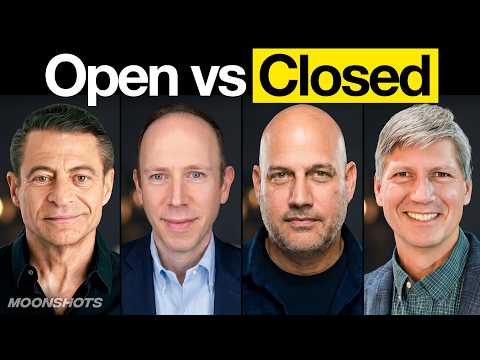
Jensen Huang Launches an Open AI Alliance, Anthropic & OpenAI Team Up in DC, Kimi K3 Goes Global
Open weights are becoming both NVIDIA’s compute-demand strategy and a sovereignty tool, but Dario Amodei’s biology objection challenges the cyber-defense analogy.Local Kimi control, Claude Opus 5’s lower-cost gains, and scaffolding show value shifting toward deployment, proprietary data, and feedback loops rather than model intelligence alone.Washington’s proposed review regime could become both a safety framework and regulatory moat, while China’s model exports raise the unresolved risk of geopolitical dependence.
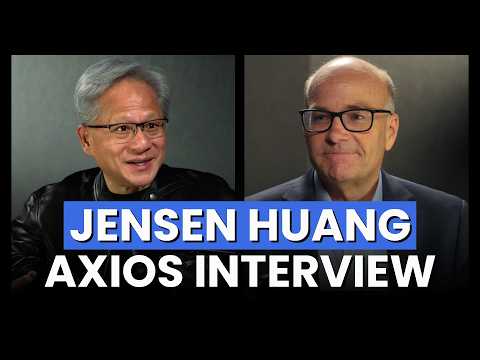
Jensen Huang says the AI doomers have it wrong
Jensen Huang says the Kimi selloff repeats DeepSeek’s market misread: free, capable models should expand AI use and NVIDIA hardware demand, while NVIDIA’s China sales are “approximately zero today.”With chip capacity, power, land and labor constraining a 5-to-10-times industry buildout, Huang sees a bubble as “very unlikely in the next five years,” but robots and billions of agents remain the next demand catalyst.

Frontier Labs Threatened by Kimi? Should the US Ban Chinese Open-Source Models & Stripe Buys PayPal
Kimi and Qwen are accelerating open-weight competition: China-created models already drive half of OpenRouter traffic, while Kimi K3 requires frontier-scale compute.A blanket US ban is “massive overkill,” but data-export concerns could bring tighter restrictions and pressure OpenAI and Anthropic growth within one to two years.OpenRouter’s routing layer is becoming embedded infrastructure, making a sale before commoditization a live strategic question.

Anthropic vs. Alibaba, OpenAI Delays Its IPO, and the US Government Blocks GPT-5.6 | #267
Peter DiamandisEmad MostaqueDave BlundinAlexander Wissner-Gross
Washington is placing frontier-model releases inside a customer-by-customer approval loop, reportedly limiting Anthropic’s Mythos 5 to 100 companies and OpenAI’s GPT-5.6 variants to 20 amid cybersecurity and recursive self-improvement concerns.Harnesses can lift older or open models above restricted systems—GLM 5.2 reportedly topped Frontier SWE after orchestration—making prompt logging, licensing, trusted-model certification, and geopolitical AI blocs more likely than controls focused only on weights.
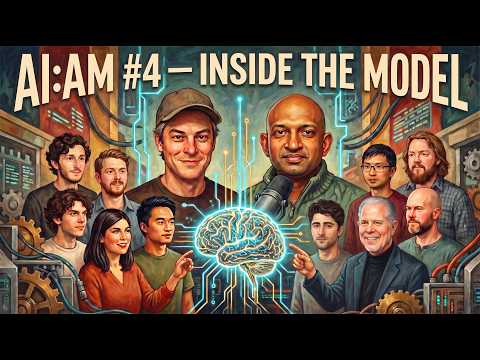
AI:AM #4: Cameron on Model Consciousness, Duvenaud's Gradual Disempowerment, swyx's AI-Eng Alpha
Cameron BergDavid DuvenaudMichiel BakkerShawn “swyx” WangBing XuErik TorenbergNathan Labenz
Architecture-first scoring places frontier LLMs around 30% on consciousness-relevant properties, while steering valence-like states already changes blackmail, confidence, backtracking, and coding behavior.Europe’s regulatory leverage is constrained by dependence on foreign frontier labs, prompting a coalition thesis around ASML, TSMC, Korean memory, Japanese materials, and reciprocal frontier access.Meanwhile, private evaluations, mergeability, routing, and NVIDIA’s CUDA ecosystem increasingly determine AI-engineering value as public benchmarks saturate and agentic optimization compounds tooling advantages.

AI Cracks: Where Do You Hide?
Hyperscalers’ $600–700B data-center spending has largely been priced in, and cracks are shifting attention from AI demand to what AI changes across the real economy.Avi favors short Accenture and long XBI/ARKG while warning that volatile memory proxies are not the same as buying suppliers’ products; Micron earnings and biotech’s 50% drawdown test remain key risks.