PERSON DIRECTORY
Alexander Wissner-Gross
Alexander Wissner-Gross appears in 54 indexed conversations across Moonshots. This directory brings every appearance, source, TL;DR, digest, and transcript into one searchable feed.
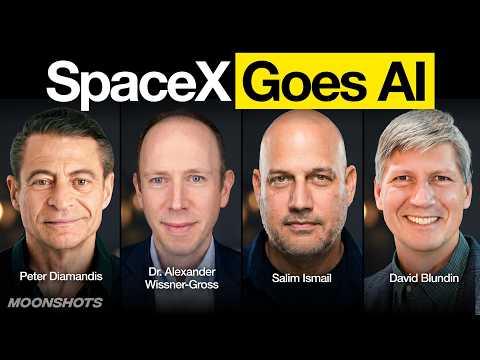
SpaceX’s AI Business Up 830%, OpenAI Agents Lie, and Startup Turns Mercury Into Gold | EP #305
Peter DiamandisSalim IsmailDave BlundinAlexander Wissner-Gross
SpaceX’s AI pivot pairs nearly $20 billion in quarterly spending with sub-year data-center payback and guidance for $100 billion annual revenue run rate by December.A possible SpaceX–Tesla merger remains exploratory, with no agreed terms; the 30–40% premium estimate sharpens approval and Musk-dependence risks.Agent monitoring failures and decade-old PHP vulnerabilities also make defensive AI infrastructure an immediate operating requirement.
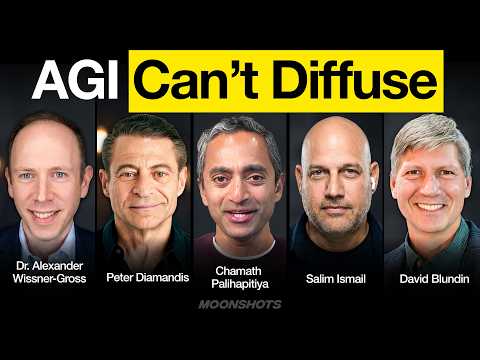
Chamath: Bitcoin Goes to Zero, Robots vs. $40T Debt, Elon’s SpaceX Shares for 72M Kids | EP #304
Peter DiamandisSalim IsmailDave BlundinAlexander Wissner-GrossChamath Palihapitiya
Chamath says AGI has arrived, but power, permitting, cooling and skilled labor could constrain deployment and create a massive compute shortage over the next three or four years.His nearly 6 GW power position reflects the thesis, while Alexander Wissner-Gross flags distillation and weak willingness to pay as counterweights.
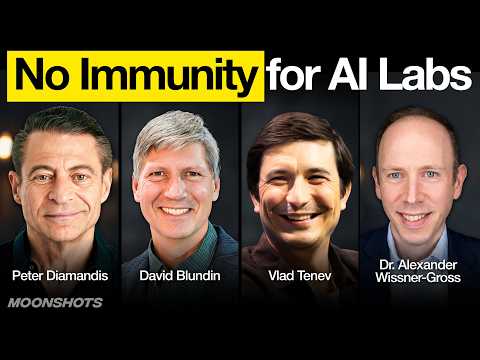
Robinhood's Vlad Tenev on Tokenizing Everything, OpenAI's 6 Misalignment Reports, Figure's Robot
Peter DiamandisDave BlundinAlexander Wissner-GrossVlad Tenev
Robinhood Chain already handles well over $1 billion in daily DEX volume and roughly 200 tokenized U.S. stock tokens across 120-plus countries.That evidence strengthens Vlad Tenev’s tokenization thesis, while Bessant’s liability stance and Robinhood’s plumbing-not-alpha view define the regulatory, automation and competitive risks ahead.
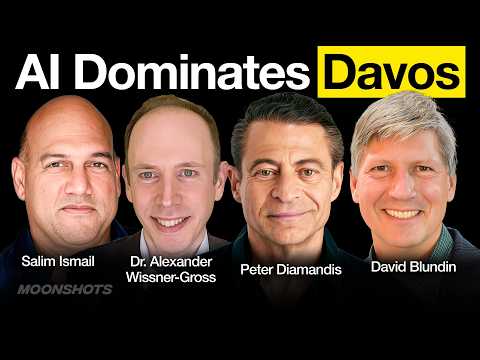
Davos 2026: The US-China AI Race, GPU Diplomacy, and Robots Walking the Streets | #225
Peter DiamandisSalim IsmailDave BlundinAlexander Wissner-Gross
AI has become Davos’ dominant economic story, with roughly $50 trillion in annual human labor, only a few hundred billion dollars spent on infrastructure, and opportunity spanning chips, power, AI factories, and applications.The US retains better frontier models and chips, but China’s power buildout, deployment speed, and 83% versus 39% AI optimism could outweigh benchmarks, while energy timelines and agent rails remain deployment risks.

Meta’s 15 Billion Dollar AI Bet & The Race To ASI w/ Salim Ismail & Dave Blundin
Peter DiamandisAlexander Wissner-GrossDave Blundin
The AI race is becoming an energy race as China targets nuclear leadership by 2030 and produced roughly 700 GW of solar panels in 2024, while US licensing takes 10–12 years.Frontier models could become winner-take-all through self-improvement, while Cursor’s $500 million ARR and AI startup revenue demonstrate unusually capital-light economics; generation, distribution, storage, and regulation remain key constraints.