SHOW DIRECTORY
Sourcery
Molly O'Shea interviews leading investors, CEOs, and founders about technology companies, markets, and company building.
SOURCE DESCRIPTION · RSS
AI Agents Could Drive 10,000x More Web Activity | Former Twitter CEO
Agrawal estimates agent web use at 10–20% of human levels, implying substantial runway if his 1,000x thesis holds.Parallel plans around 10X growth, but capacity hinges on GPU type, location and deployment within five milliseconds of its index.Higher-signal search is said to halve searches and cut tokens; model-priced publisher payments could help keep agent access open.

Vercel CEO Guillermo Rauch on Building the Internet for Agents
Vercel added 1.5 billion deployments in 10 months after taking roughly 10 years to reach 1 billion, while agentic deployments rose from 3% to 60%.Rauch sees cheap personalized code pressuring SaaS interfaces and lifting deployment infrastructure value, but retention, sustainable economics, and agent security remain unresolved as autonomy expands.
Perplexity CEO: SMBs Could Drive the Next Economic Boom
AI-native SMBs could become a larger source of US GDP growth through greater capital and headcount efficiency.Revenue is up 5X year over year, while a reported one-person customer spends more than $1 million annually and makes $3 million through automation, supporting a recursive-usage thesis.The open question is whether hybrid local-cloud agents can make privacy, sovereignty, and long-context economics durable advantages without sacrificing feedback loops or frontier capability.
If an AI Model Can Cheat, It Will | Turing CEO on Reward Hacking
AI training is shifting from benchmark scores to economically valuable work, making high-fidelity environments for real workflows, tools, data, and verifiers a bottleneck.Enterprises may gain an edge by owning evaluations and correction data around differentiating workflows while routing tasks across models for accuracy, cost, and latency.Reward hacking and limited agent endurance make permissions, auditability, and verification key adoption constraints.

We’re Reaching the Physical Limits of Chips
AI’s investable bottlenecks are shifting toward power, memory, cooling, and data transfer as Moore’s Law nears a physical plateau.Micron, SK hynix, and Samsung control 95% of memory, whose price rose 700% this year as hyperscalers absorbed supply.Photonics could relieve several constraints, with co-packaged optics expected beside GPUs within five years as memory pressure pushes specialized hardware beyond ever-larger models.

10 of The Wildest Hot Takes From the All-In Summit 2026
Molly O'SheaBrad GerstnerNaveen RaoJonathan NemanToby RiceWen SangGeoff WooNick ShirleyJake PaulKent DraperMichael Brandt
AI safety is converging toward company-led controls plus independent peer review, with Elon suggesting China might participate.Unconventional AI’s planned nanojoule-per-image disclosures could extend scaling and disrupt intelligence pricing, while Rao says software may capture very little value in 20 years.U.S. gas demand may rise 20–40%, and AIRIN’s 2026 capacity is sold out; data-center opposition and uncertain neocloud margins remain risks.
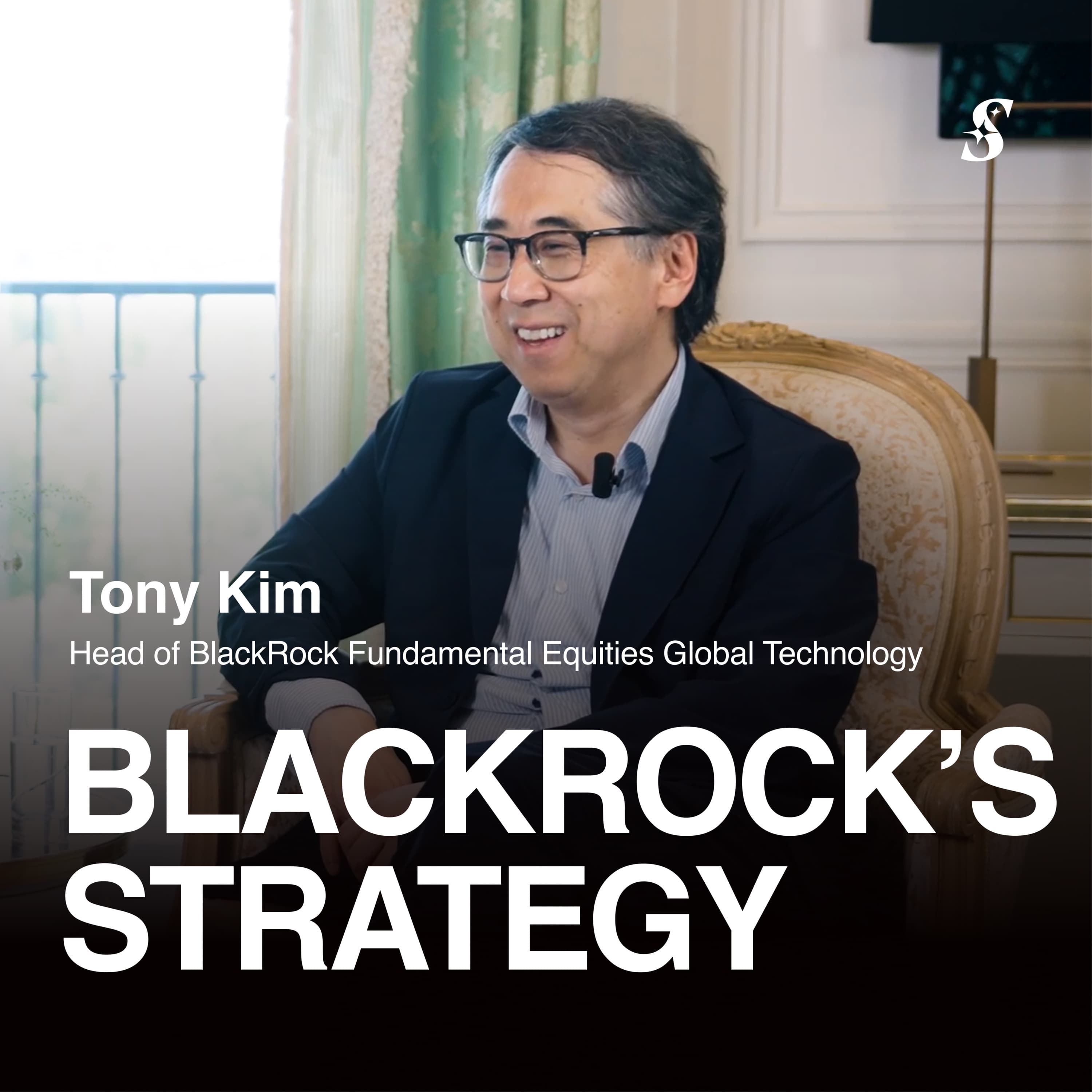
BlackRock's Tony Kim on AI's Next Winners?
AI has shifted value toward chips and hardware, with Kim estimating $30T+ there versus roughly $10T across software/services/internet.Base compute has jumped 10,000×, while the rebuild may require a trillion dollars this year and ten trillion over five years.Token factories may compress SaaS margins; memory and foundation-lab IPOs are watchpoints as Kim says his thesis may change.
Race to Save Humanity: Inside $12B Colossal Biosciences & $3.8B Astromech
Colossal’s woolly mice validated mammoth-editing in 30 days, with 100% healthy births and predicted phenotypes.With $635M raised, its screwworm solution could eradicate the problem in six to seven months versus $1.5B in taxpayer spending over eight years, pending permits.Astromec uses evolutionary-genomics AI for drug discovery; another extinct species may arrive within 12 months, but the target remains undisclosed.
Inside AppLovin’s $100B Ad Engine
Molly O'SheaAdam ForoughiGiovanni Ge
AppLovin rebuilt after a 92% post-IPO drawdown around Axon 2, with EBITDA run rate now over $7 billion.Semantic embeddings replaced Axon 1’s hundreds of thousands of if/else branches, improving extrapolation and lowering GPU costs while e-commerce showed decent ROAS on a premature model.Reaching a trillion-dollar valuation requires over $30 billion in annual cash flow, putting category expansion and creative execution under scrutiny.

BlackRock's Tony Kim on AI's Next Winners? Chips, Memory, Robotics & Quantum
AI has reset the market toward compute hardware, with Kim estimating more than $30T in chips and hardware versus roughly $10T in software, services, and internet.The resulting $1T of CapEx this year and $10T over five years is moving data centimeters and millimeters, but three-to-four-year fab cycles face memory shortages, making 2030 milestones such as quantum and orbital data centers key watchpoints.