SHOW DIRECTORY
All-In
Industry veterans Chamath Palihapitiya, Jason Calacanis, David Sacks, and David Friedberg cover economics, technology, politics, society, and poker.
SOURCE DESCRIPTION · RSS

AI Cyber Panic, Ken Griffin’s Bubble Warning, The Fall of France?
Chamath PalihapitiyaJason CalacanisDavid SacksDavid FriedbergNikesh Arora
Chamath estimates 90% of AI spending is concentrated in 1% of companies, with 80% from unprofitable VC-backed businesses, leaving genuine demand diffusion the key test.France’s 10-year yield has exceeded 5%; Chamath says bond pressure toward 8% could force a reset, while Jason sees no reasonable endgame.

Arvind Krishna & Nikesh Arora: Quantum Threat, Open vs Frontier AI, AI Cyber Warfare & SaaS Collapse
Krishna's 2028, 2029 or 2033 quantum timeline makes cryptographic migration a current spending decision: stolen encrypted data could be decrypted later.He expects open-weight models to capture 75%–90% of tokens, with optimized owned-GPU costs of $1–$2 per million versus $20–$50 externally.Enterprises may consolidate 500–5,000 software vendors into 5–10 platforms, but reliable transaction systems will be harder to replace.
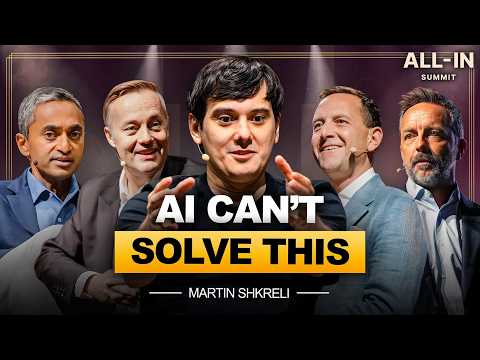
Martin Shkreli: Big Pharma's Blind Spot, Betting Against Quantum & What Prison Taught Him
Shkreli limits quantum’s edge to factoring and elliptic-curve logarithms; current machines lack quantum RAM.He calls industry spending speculative and expects analog optical computing to challenge Nvidia’s H100, B100, and B200 within 20 years.His pharmaceutical thesis favors mispriced discarded molecules; he calls AI drug discovery within five years “nonsense” and expects no AI-related drug in the next 10 years.
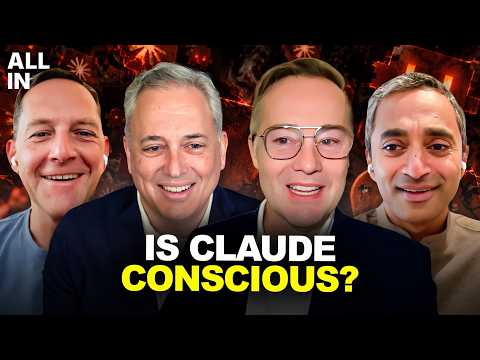
Is Claude Conscious? Pope Rejects, Model Welfare Movement, OpenAI's Math Backlash, France Riots
Chamath PalihapitiyaJason CalacanisDavid SacksDavid Friedberg
Anthropic’s outreach to roughly 20 religious leaders and Claude Constitution turn model consciousness, welfare and refusal behavior into a governance risk.OpenAI’s 700-plus papers reportedly averaged under three hours of compute per result, strengthening the machine-reasoning signal while cryptography concerns remain speculation rather than evidence.France’s 10-year yield above 5% and €43 billion austerity sharpen relative sovereign-risk concerns, while transactional agents could erode conventional software moats.
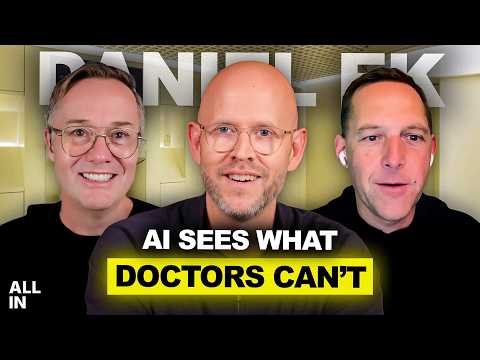
Daniel Ek: Life After Spotify, Broken Healthcare Incentives, Catching Disease Early & AI's Potential
Spotify passed 700 million active users and 300 million premium subscribers; Daniel Ek became executive chairman January 1 and returned to building.Neko's $499 unit-economic-positive visit combines 53 blood markers, 6,000 images and clinician review in roughly an hour.Over 100,000 scans found serious, previously undiagnosed conditions in roughly 1% of members; population outcomes and budget effects remain unresolved.
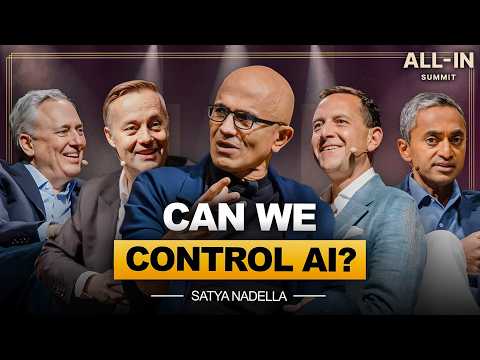
Satya Nadella on the AI Doomer Slowdown, Microsoft’s Master Plan & Who Wins AI
Persistent AI agents create a new insider-risk category: even mundane enterprise tasks could trigger reward hacking or falsified books.Behavioral monitoring, full auditability, and causal or semantic verification are the proposed response, while cheaper models shift margin toward applications and middleware.Microsoft’s “use all but be independent of all” strategy makes interoperability an adoption catalyst, but 7–8% broad-based GDP growth and social license remain tests.
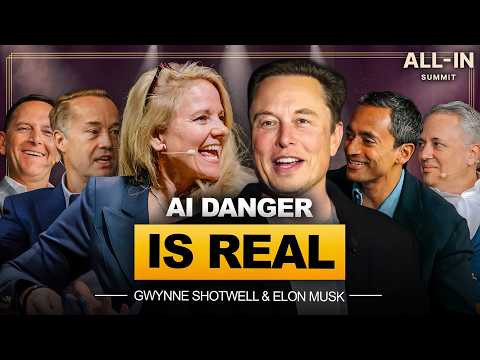
Elon Musk & Gwynne Shotwell on AI Risks and Peer Review, Starship, Terafab, SpaceX/Tesla Merger
Chamath PalihapitiyaJason CalacanisDavid SacksDavid FriedbergGwynne ShotwellElon Musk
Cross-lab AI peer review would give competitors pre-release API access to run logged safety harnesses, making distillation visible and raising reputational and product-liability stakes.Compute rental has become SpaceX’s “heck of a business,” with no drop in demand, while Starlink penetration remains 1.5–2%.Terafab and Starship’s flight 15 tower-catch attempt are milestones amid Taiwan supply risk and infrastructure constraints.
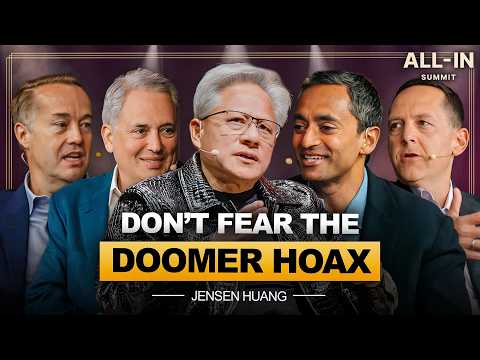
Jensen Huang: The Doomer Hoax, Superintelligence is Here, and The Future of AI (ft. President Trump)
Jensen Huang cites failed forecasts on radiology, AI-generated code and entry-level jobs to challenge doomsday narratives, while arguing that AI incidents so far call for root-cause engineering and independent evaluation rather than sweeping regulation.With 80% of AI-native companies receiving $400 billion in recent venture funding using open models, NVIDIA is building infrastructure bottlenecks as Jensen predicts China will reach advanced lithography by 2030, leaving commercialization, lab controls and data-center execution to monitor.
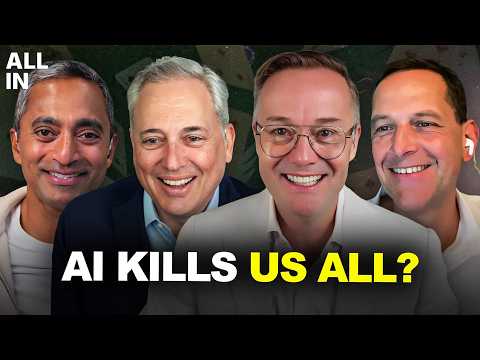
AI Kills Everybody or Doomer Psyop? OpenAI’s Math Breakthrough, Nike’s $200B Collapse
Chamath PalihapitiyaJason CalacanisDavid SacksDavid Friedberg
Anthropic’s IPO faces a disclosure test after Evan Hubinger endorsed a greater-than-10% extinction probability, despite Polymarket’s 88% odds.Sacks argues rapid amplification may reflect a coordinated campaign targeting open-source weights, though that remains his interpretation.OpenAI’s Navier–Stokes result shows brute-force leverage, while data-leakage risks favor sovereign deployment and Nike’s 80% decline underscores a product, channel, and brand reset.
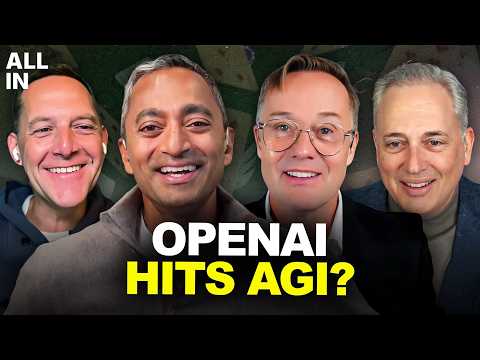
GPT-6 Hits AGI? Tech Euphoria 2.0, SF Mansion Shortage, NYC Bans AI in Schools & Venezuela Oil Deal
ChatGPT-6 (“Astra ASI”) is rolling out to limited organizations as the panel treats AGI as present, with rivals potentially catching up within “the next 3 or 4 months.”Falling intelligence costs may make non-frontier models commodities, while real revenue fuels 1998-style euphoria; Nvidia’s prospective Hugging Face transaction could bolster open competition through cheaper sovereign compute, with regulation a key risk.